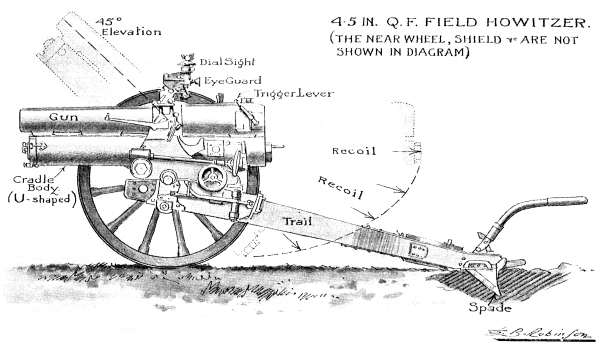
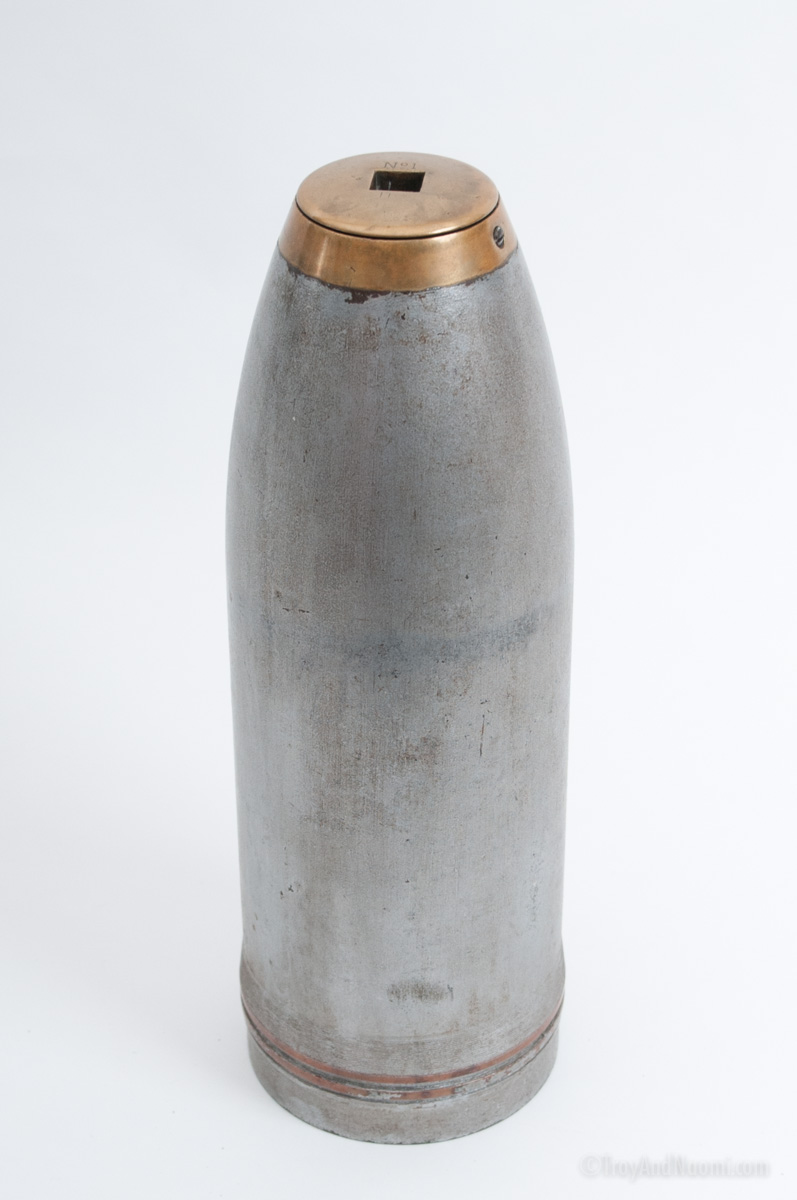
As the world pauses to remember the 100 year anniversary of the start of WWI, I can’t help but think of a little leftover piece of that war that I have. I inherited from my grandfather a 1915 WWI howitzer shell that sat next to his fireplace throughout all my boyhood. It was something that always fascinated me, and we would occasionally open it up. Unfortunately, I don’t know the story of how this unused WWI relic came to our family. He may have told me once when I was a kid, but nobody in the family seems to remember the origin either. I guess it will remain a mystery.
This empty shell is heavy. I can’t imagine a day spent loading these into the a gun, and the incredible noise of one firing. Worse yet, the horror of being on the receiving end of these things.
A few years ago I sent some pictures to the Canadian War Museum, and this is their explanation of the shell and it’s markings:
Hello,
Thank you for contacting the Canadian War Museum Concerning the Artillery projectile that once belonged to your grandfather.
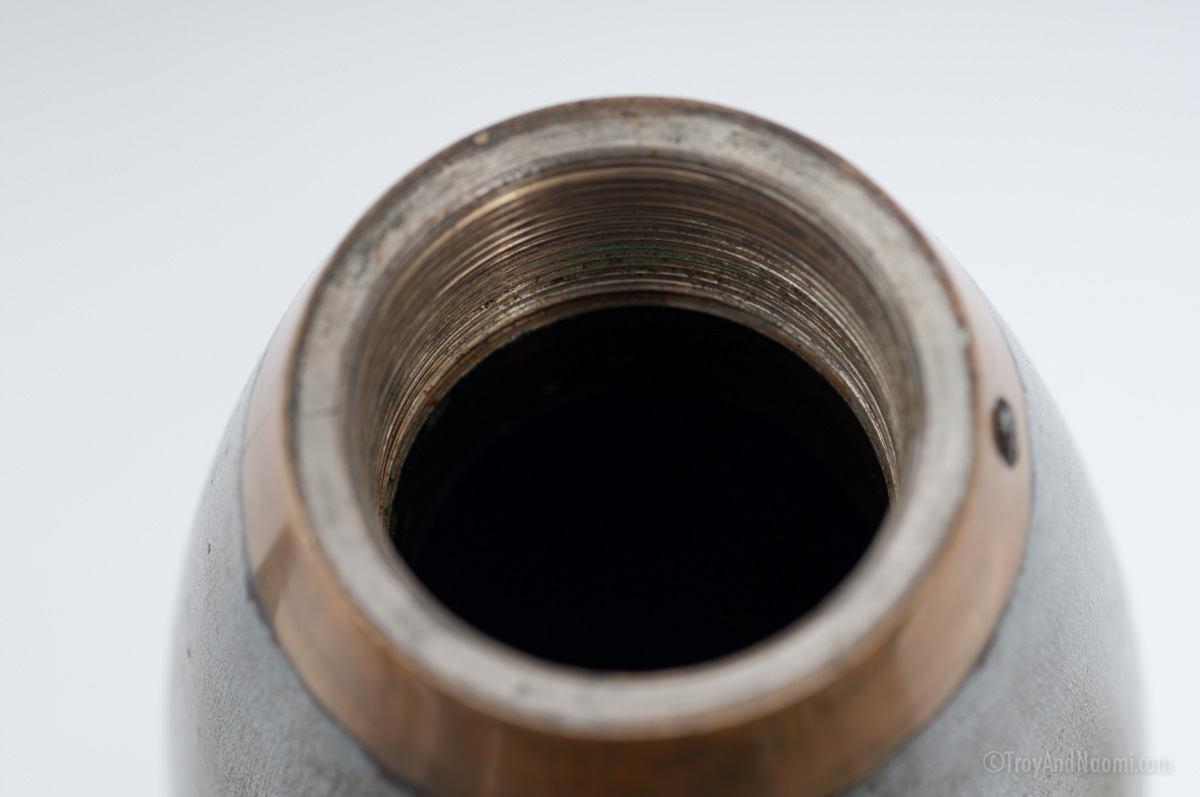
The actual filling would have been painted on the projectile. Since there is no paint, we can only guess. Since it is hollow, it is probably not shrapnel. It is probably a forging for an HE shell.
The driving band near the base appears intact, so it probably has not been fired. Indeed, it the interior is clean, it may never have been filled.
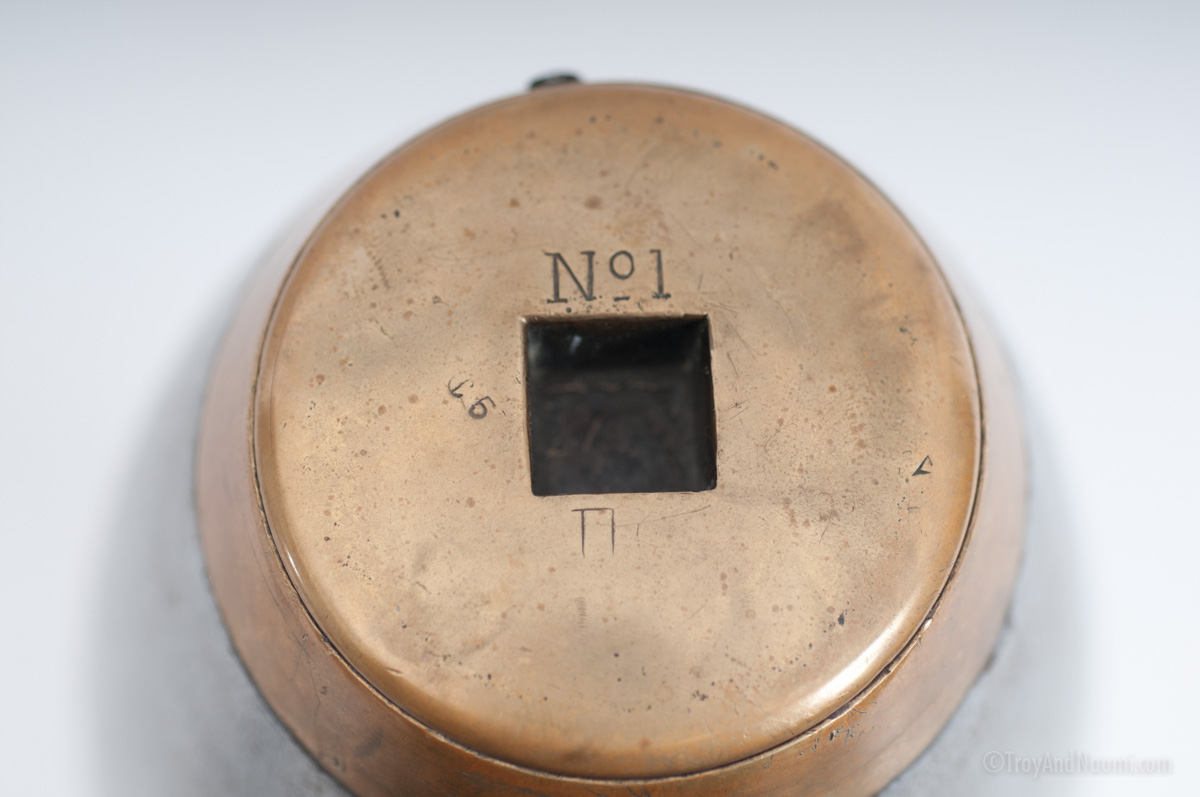
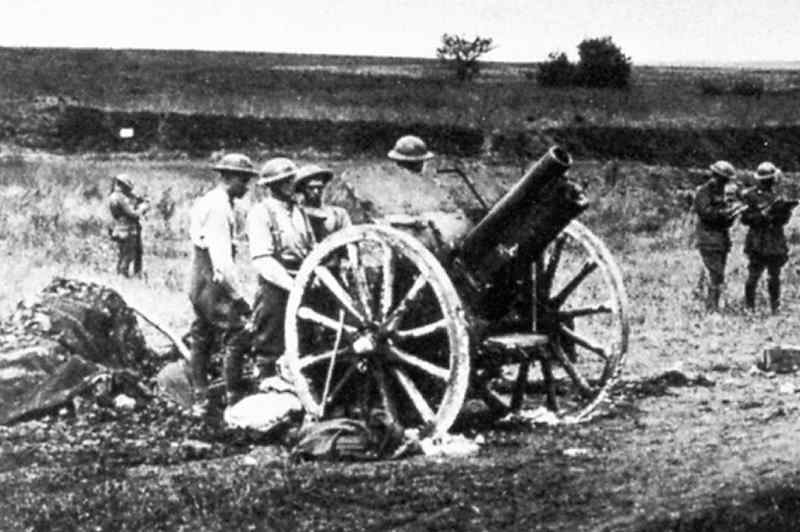
The plug on the nose is to cover the hole where the fuze would go – the No 1 means that it is a Plug, fuze hole, No. 1. This plug was used in the 4.5-inch howitzer and others.
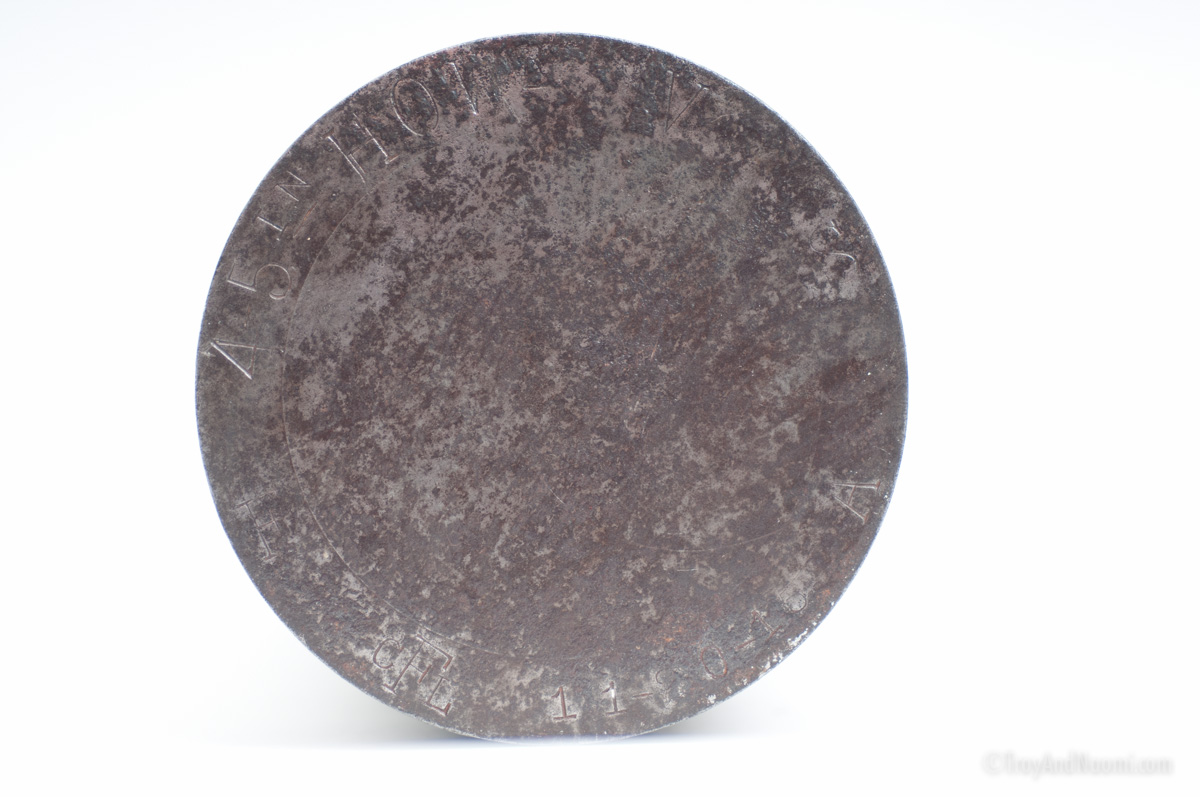
The markings on the base:
4.5-in How V – 4.5-inch howitzer [shell] Mark 5 – (V=Roman 5)
F S – forged steel construction (as opposed to cast steel)
11-20-15 – date of manufacture
CFL – manufacturing company. At this time I cannot identify the company – about 400 Canadian companies were involved in manufacturing ammunition inWW1 and similar numbers in Britain. If, as I suspect, it was never filled, then it is probably of Cdn manufacture.
I hope this information proves useful to you,
Sincerely,
Jason
Collections Manager, Transport and Artillery
Canadian War Museum
I also have a few artifacts from WWII.
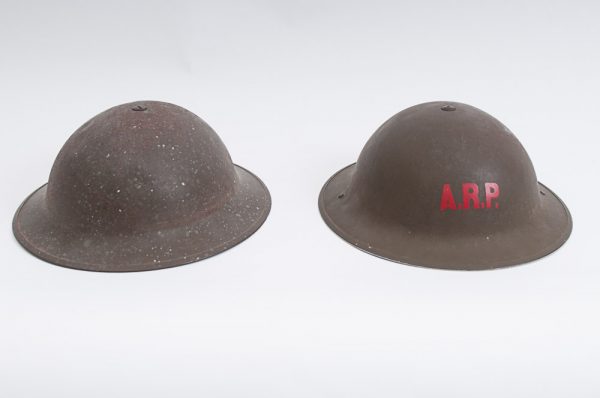
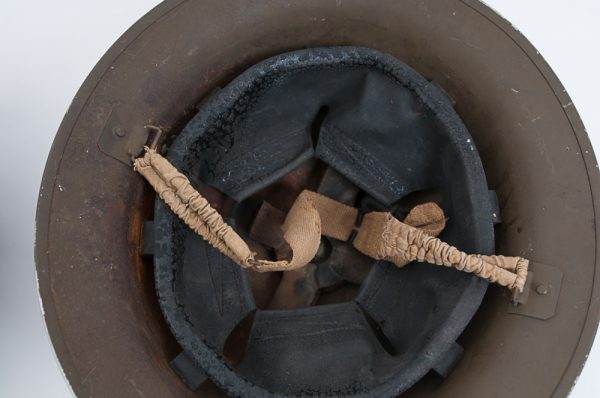
The ARP (Air Raid Patrol) helmet is, I believe, made of tin, and was really just symbolic.
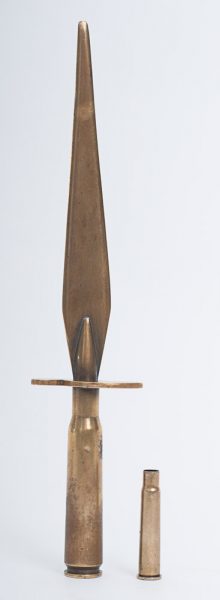
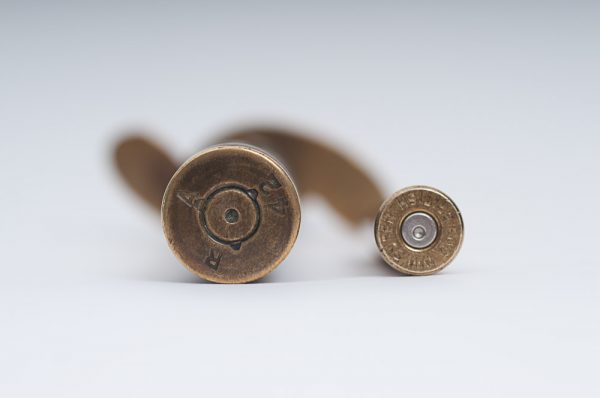
.50 cal – military ammo puts the date on the case, so the original case was made in 1942.
.50 cal – military ammo puts the date on the case, so the original case was made in 1942. Next to a British 303 case for comparison.
.50 cal – military ammo puts the date on the case, so the original case was made in 1942.
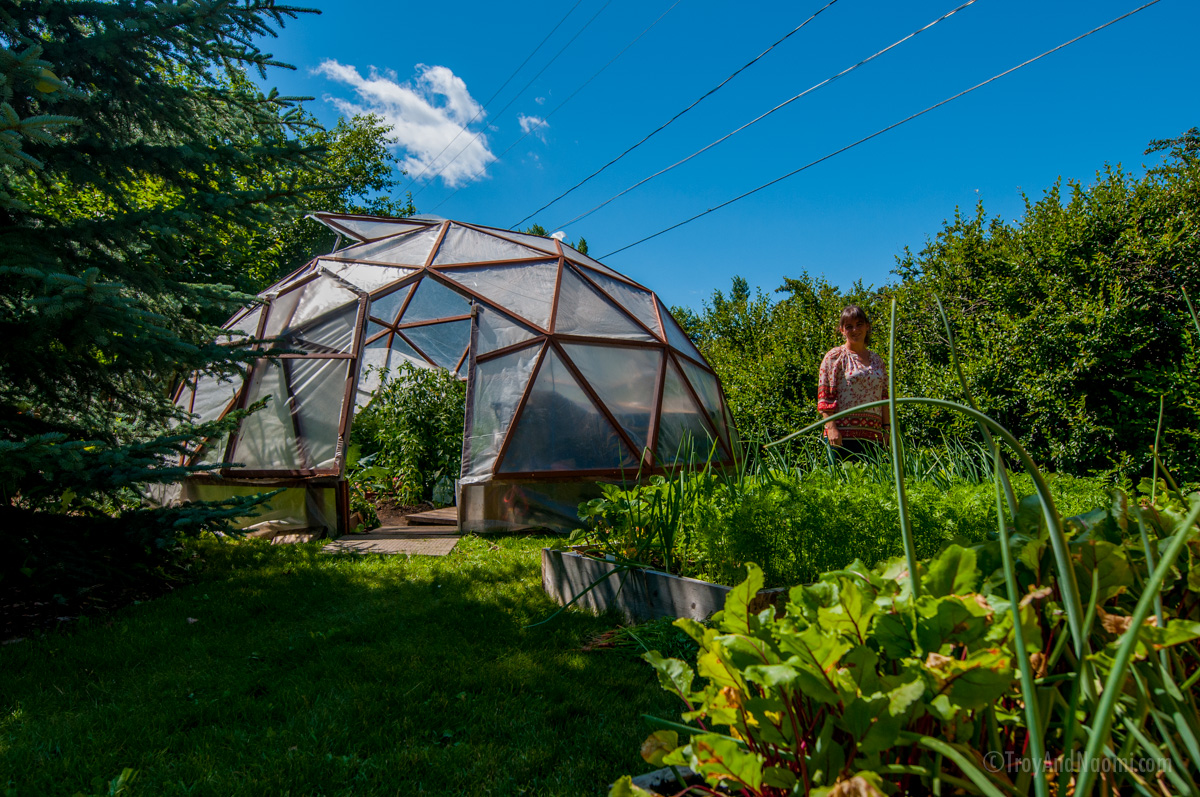
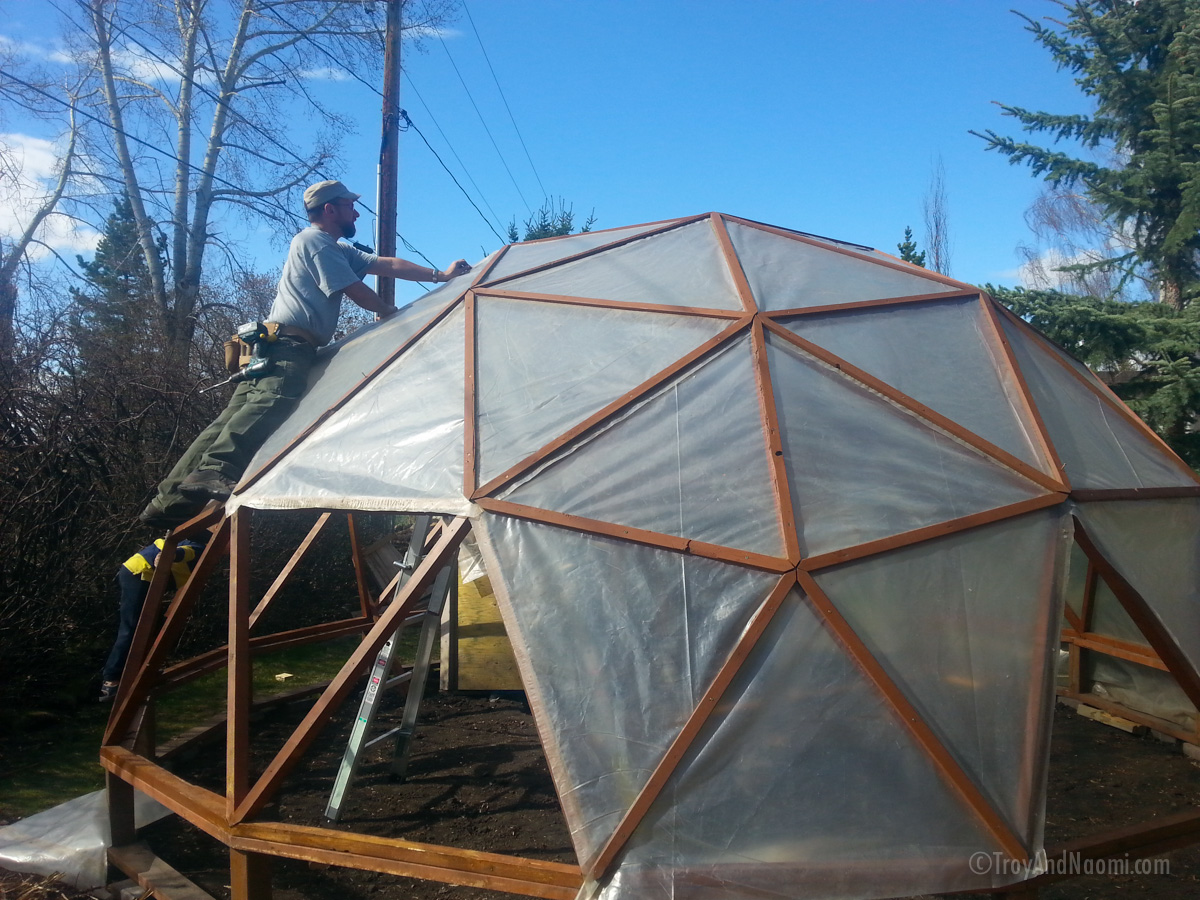
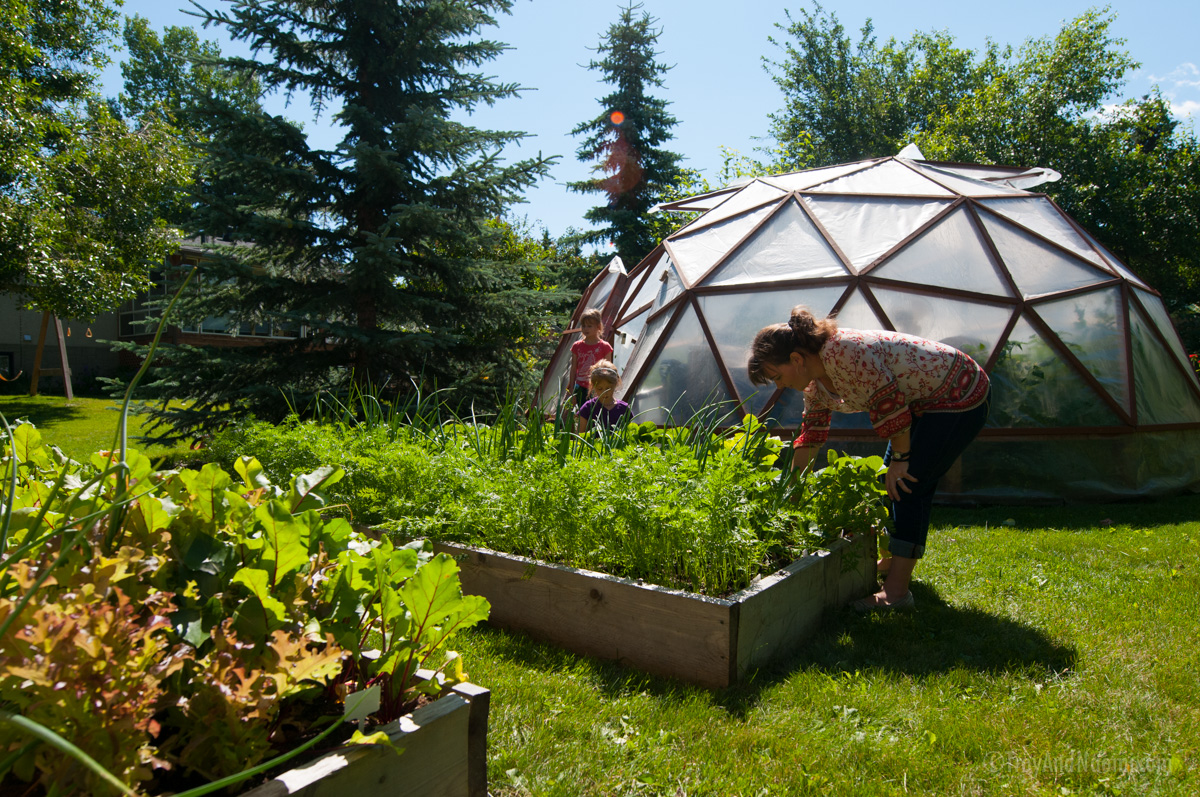
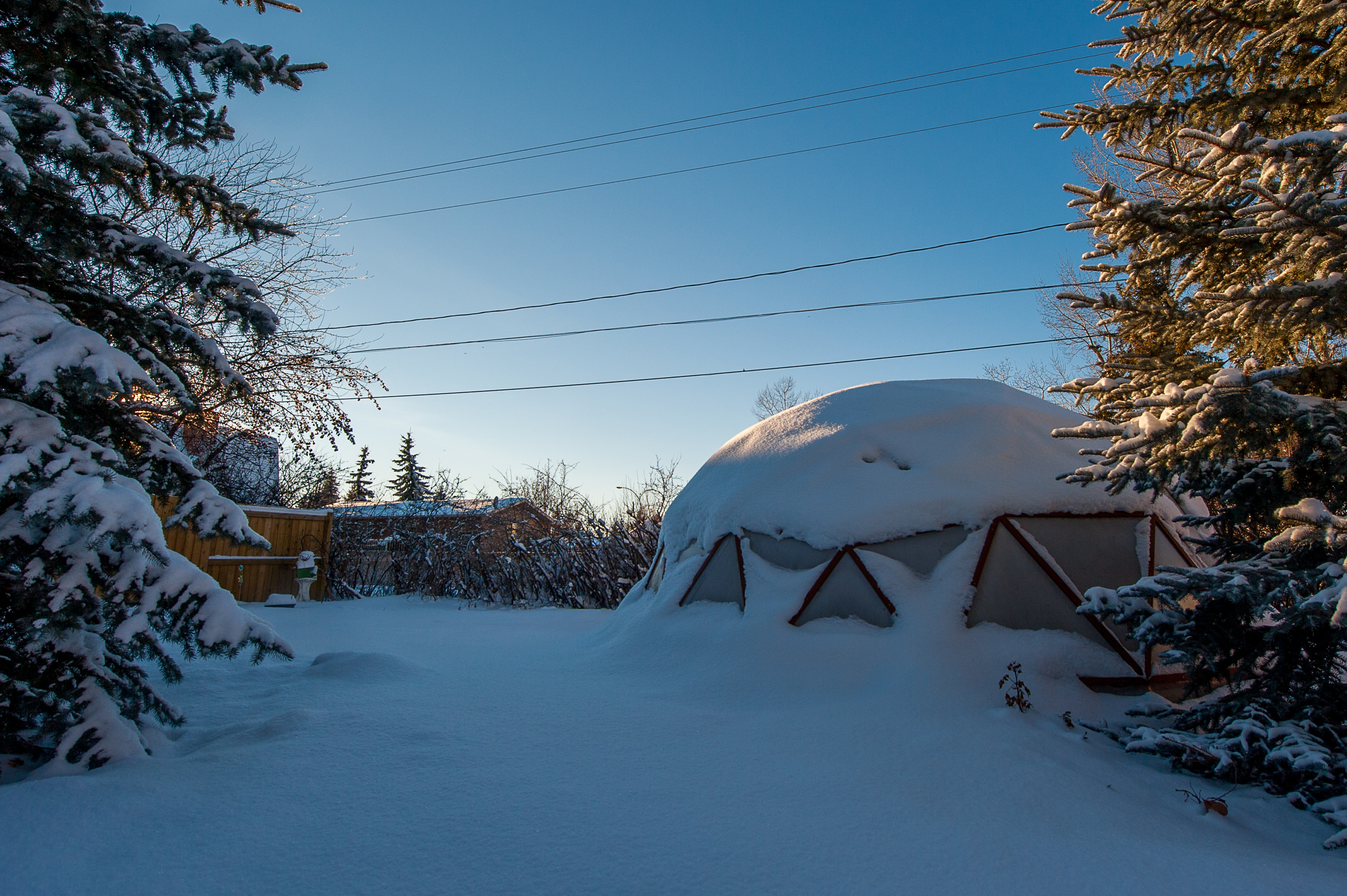
The dome is 5.4 meters (18 feet) across, and about 3 m (10 feet) high in the centre of the dome with a 3v frequency design. It is very strong, and can easily support my weight on top, and will shed snow and support the snow load in the winter. We live in a 3a hardiness zone, and this close to the mountains we can get very late frosts in the Spring or early ones in Fall, and theoretically could get a freak snow fall at any time. Hail storms are also a problem around here during the summer. All this makes a greenhouse a very valuable addition to our gardening as it can really expand a very short growing season.
Before we could move it, the greenhouse had to be carefully taken apart, cleaned, and re-stained. We prepared the ground for it on October 26 by taking up the sod and tilling the earth.
The next day it snowed… and that snow stayed until April.
We kept the wood framing inside all winter, waiting for some nice weather to come. Once the snow melted, the base was levelled to prepare for the dome. We put concrete blocks under it to keep the wood off the ground.
This is a time lapse video that I made of the construction back in May. Don’t be fooled by it. Despite the four seasons seen in it, this was done over the course of an evening and a Saturday in mid-May.
Putting the skin on – a special greenhouse quality, UV resistant poly.
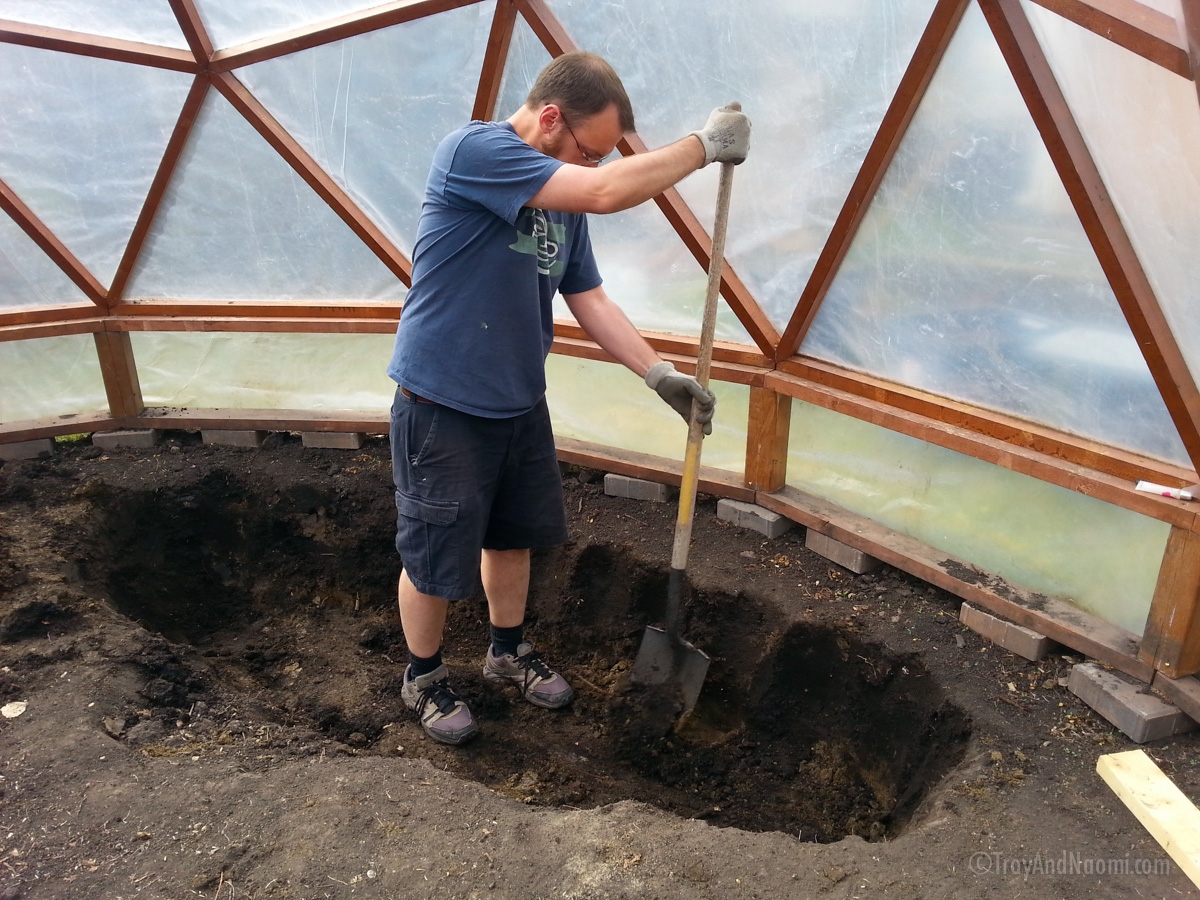
Digging the hole for the water tank. The tank is on the north side of the greenhouse, right next to the door (just off the right side of the picture). By burying the bottom of the tank, it gives it the strength to hold in the immense water pressure. The purpose of the water tank is to provide some thermal inertia, if you will. It absorbs heat during the day, and helps keep the greenhouse warm at night. I have some water hoses that circulate water around the base of the plants. In the spring, that water hose can be more than 10C warmer than the air around it at night.
Painting the water tank. Ellie made her own old-timey bonnet.
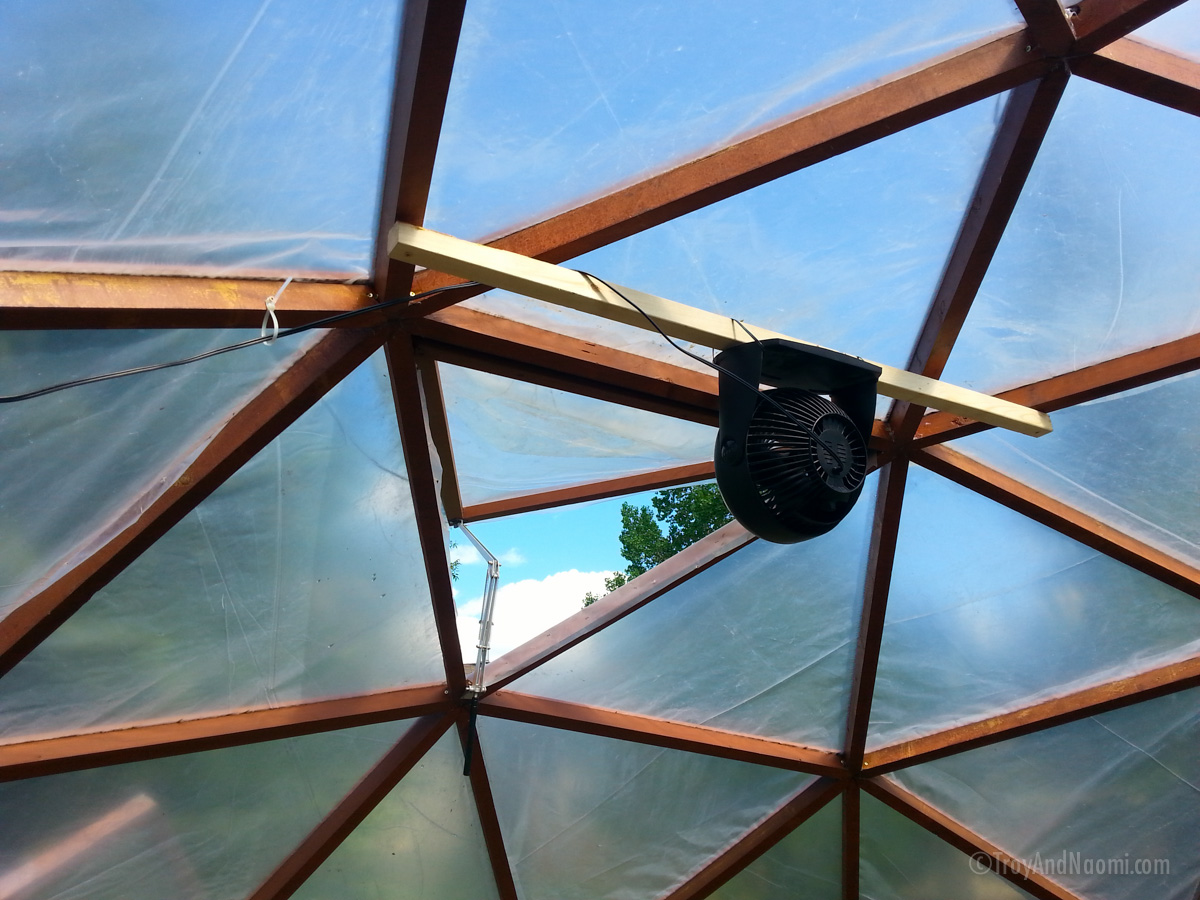
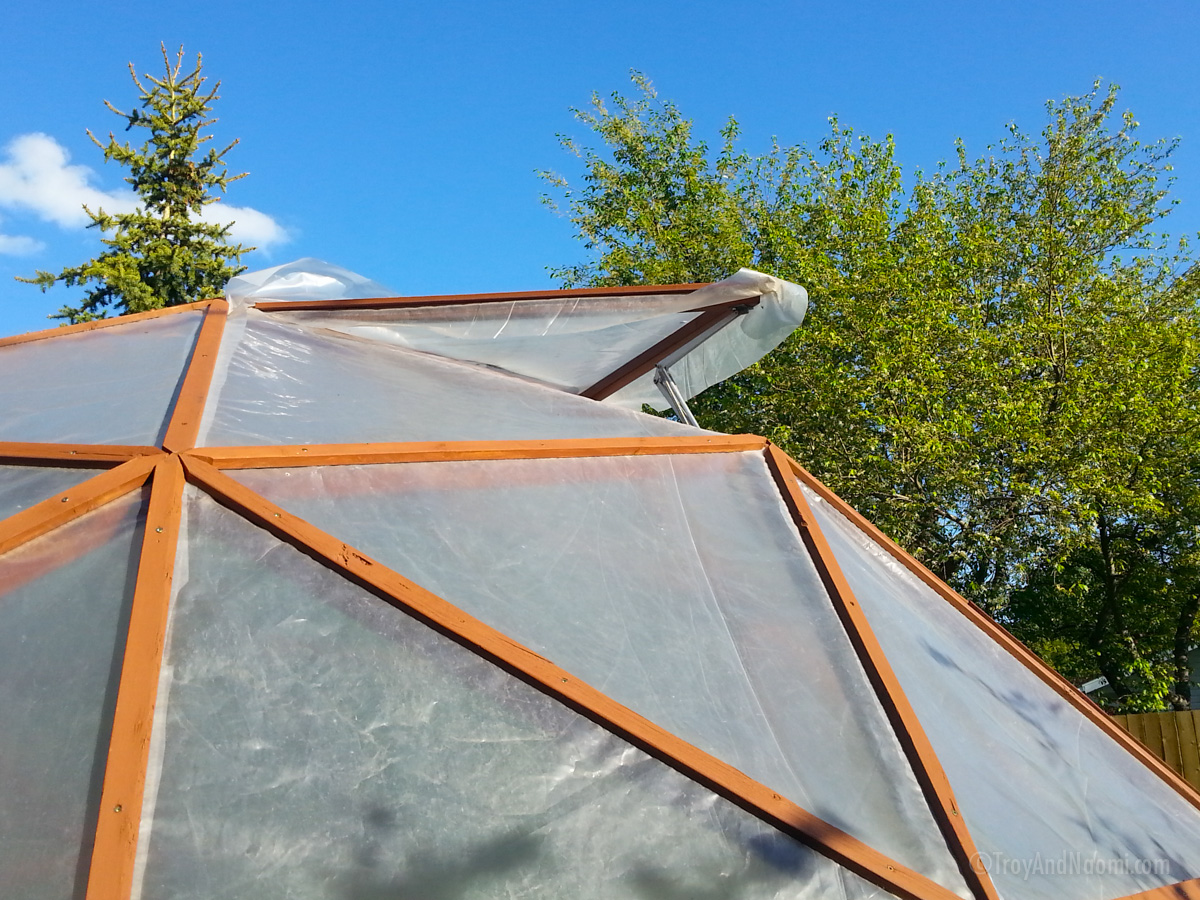
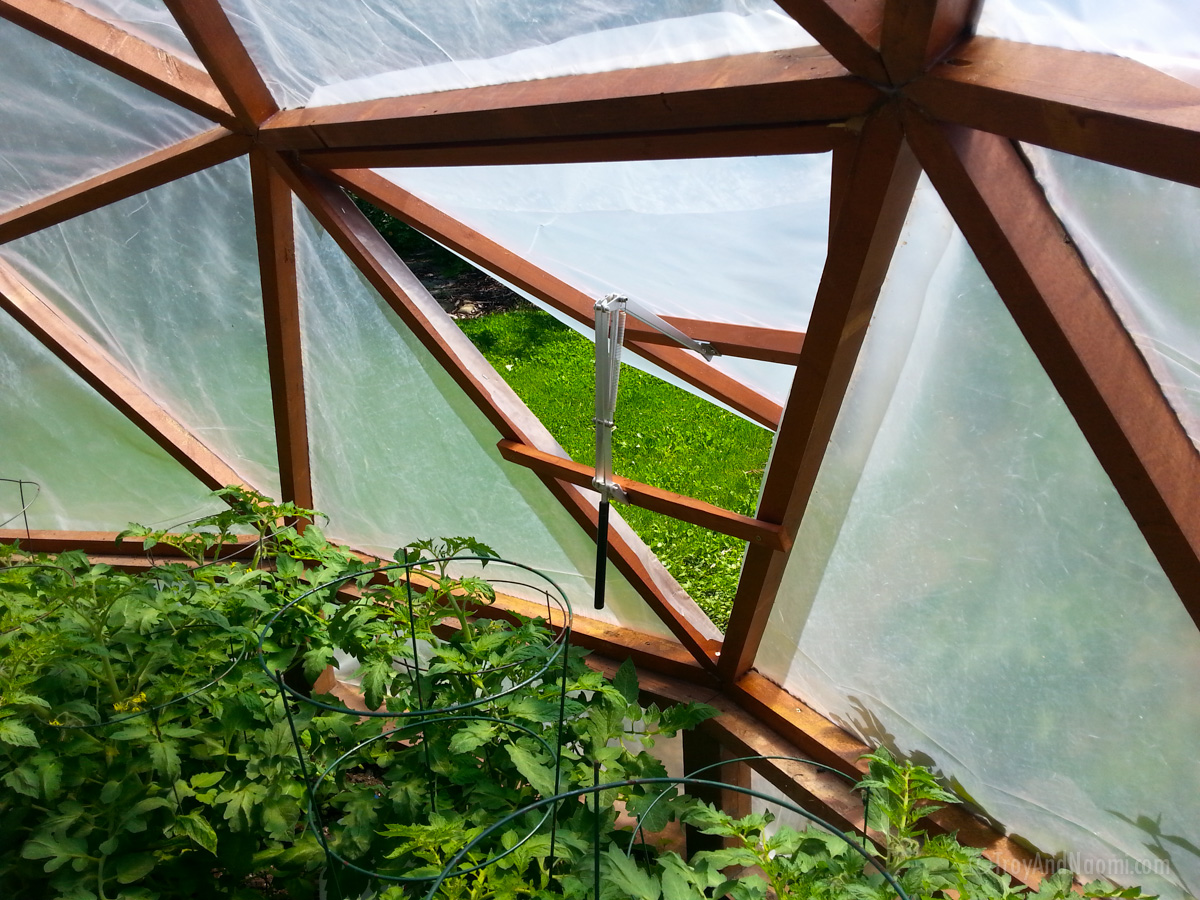
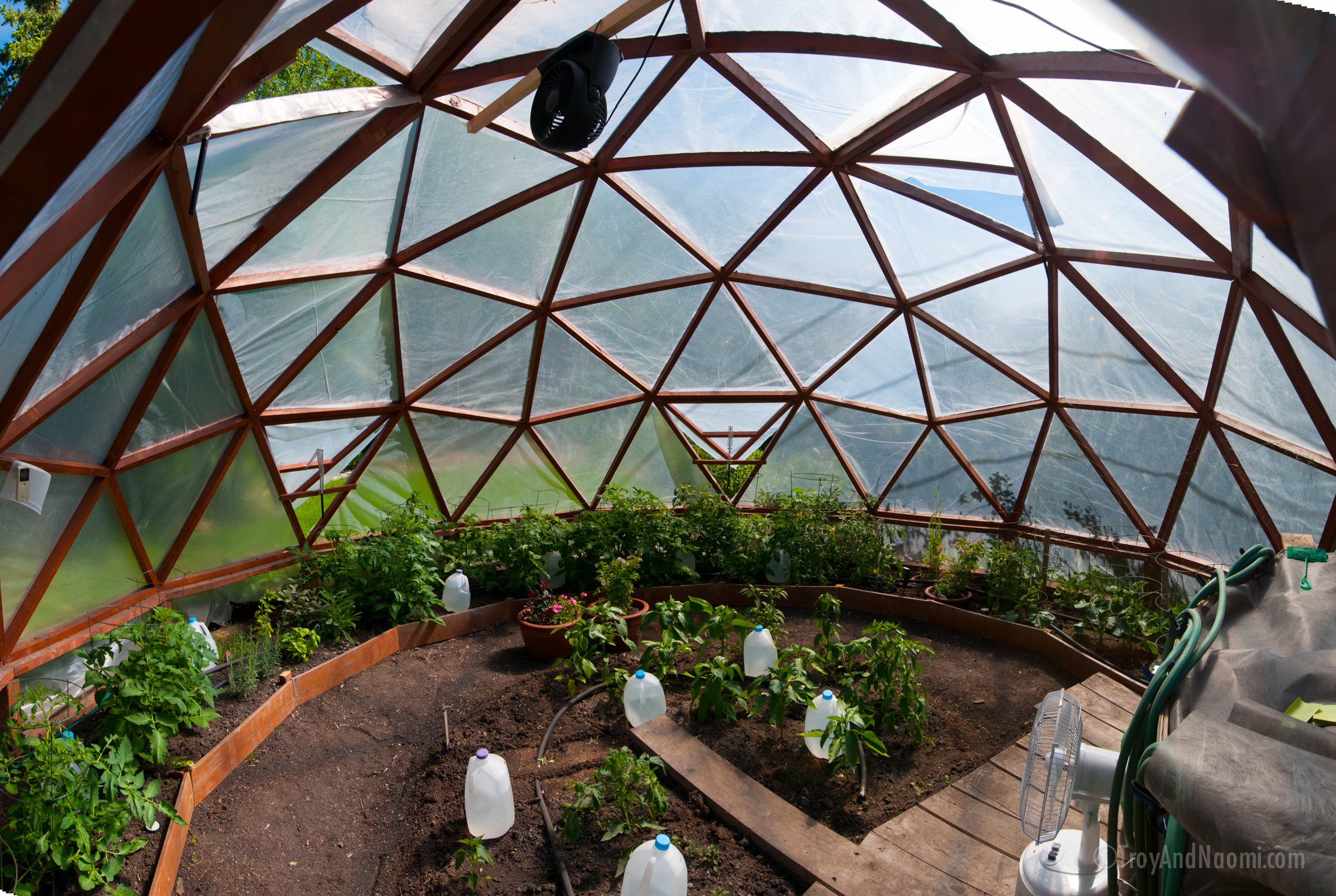
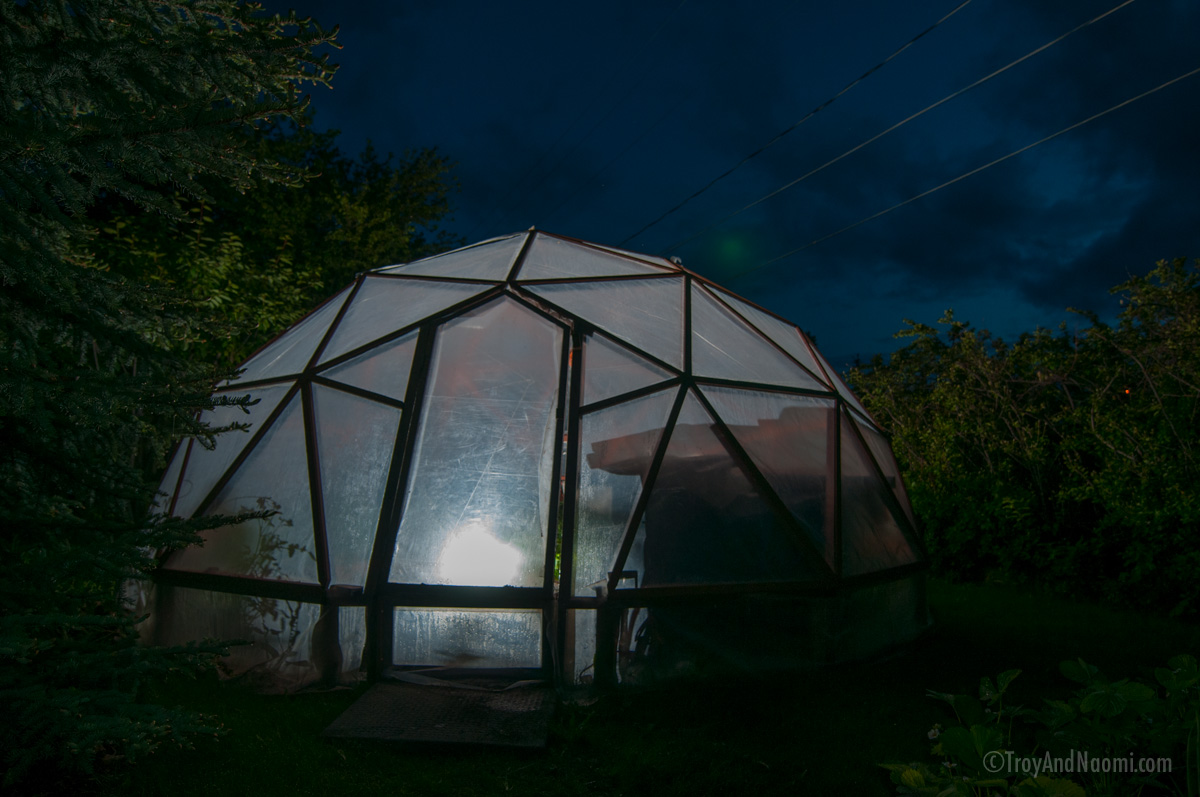
To keep the greenhouse from overheating, there are four self-opening windows, two down low and two near the top of the dome. As the openers get warm, the hydraulic cylinder pushes the window out. We mounted a fan that is controlled by a timer on one of the top windows to force more hot air out the top. Once the sun shines on the greenhouse for awhile, the windows start opening up like petals on a flower.
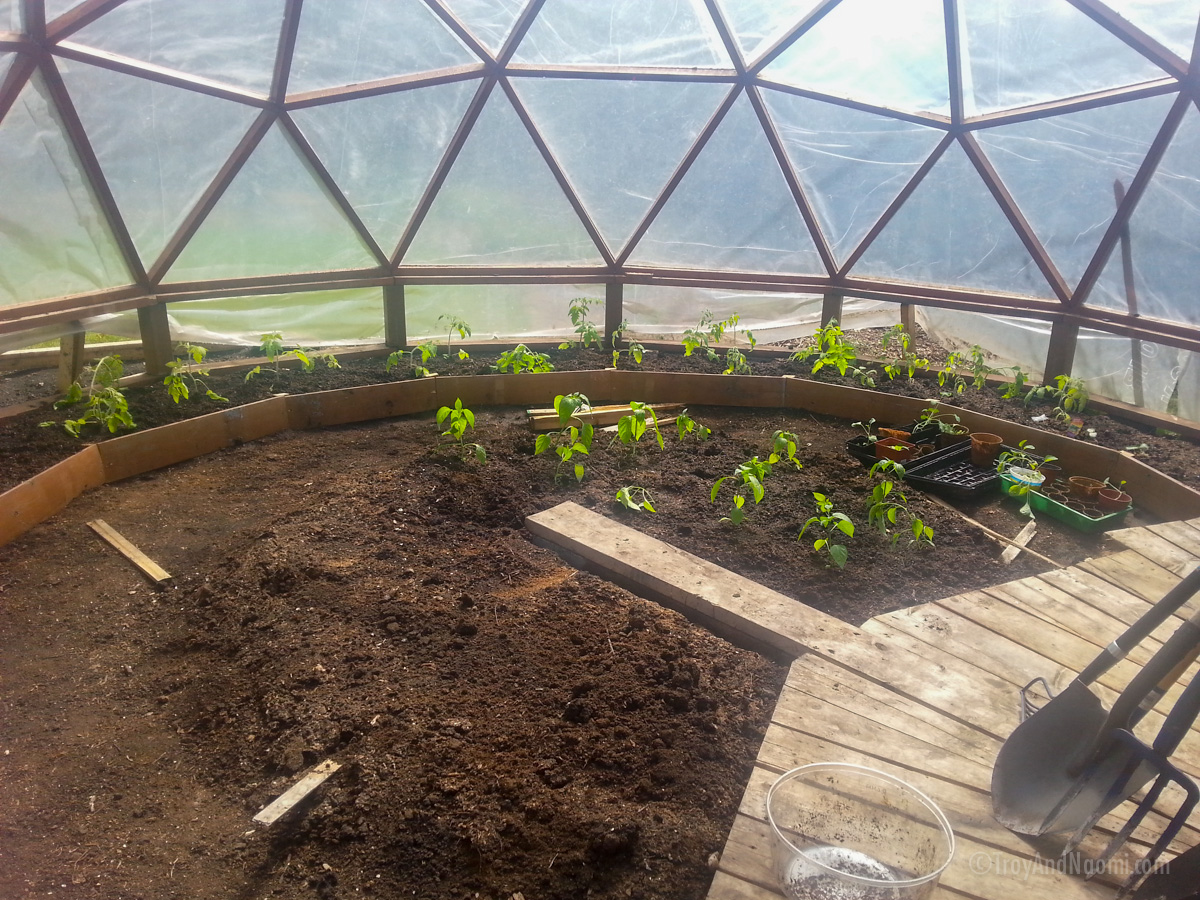
Greenhouse set up and first plants in the ground! This photo was taken on May 22, 2014 – a bit of a late start because of the construction of the dome. The tomatoes were planted a bit too close together… live and learn.
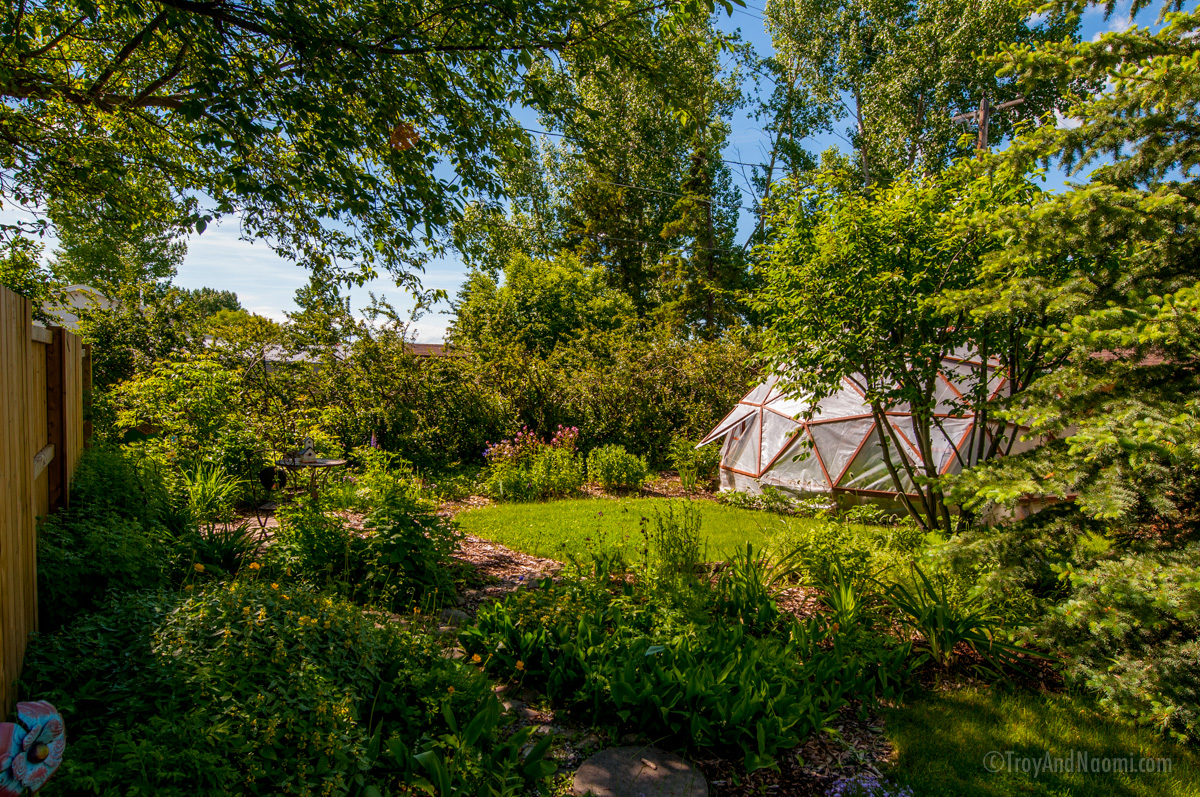
The greenhouse fits in nicely in the back half of the backyard. The house had some large perennial flower beds when we bought it, and we have tried to keep them up, but we are slowing changing some of the landscaping over to foodscaping – landscaping with a purpose.
We had the greenhouse set up for about a month before we left on a 3.5 week trip to Ontario and New Brunswick! Thankfully, Naomi’s parents were able to keep an eye on the greenhouse in our absence. Here is how it looked when we left (June 23). The milk jugs are there to absorb heat during the day and radiate it back to the plants at night, which can get pretty cool this close to the mountains (between 7 and 13C, or 44F to 55F), even in July and August.
And when we got back on July 17:
We hung up some frost cloth on the south side to block a bit of sun and help cut down on heat a bit. On a cool day it can still get over 30C (86F) in there, and a hot (for here) day of 30 C it gets around 37C (97F) inside.
When we left for our trip we had one plant coming up that we didn’t recognize. It just had two big leaves, and looked similar to the broccoli that we had growing in there. We figured we would leave it there and see what it was when we got back. Well, we were surprised to return the next month to discover a giant canola plant! Not sure how that seed got in there…
The greenhouse is an important part of our gardening. Inside we have:
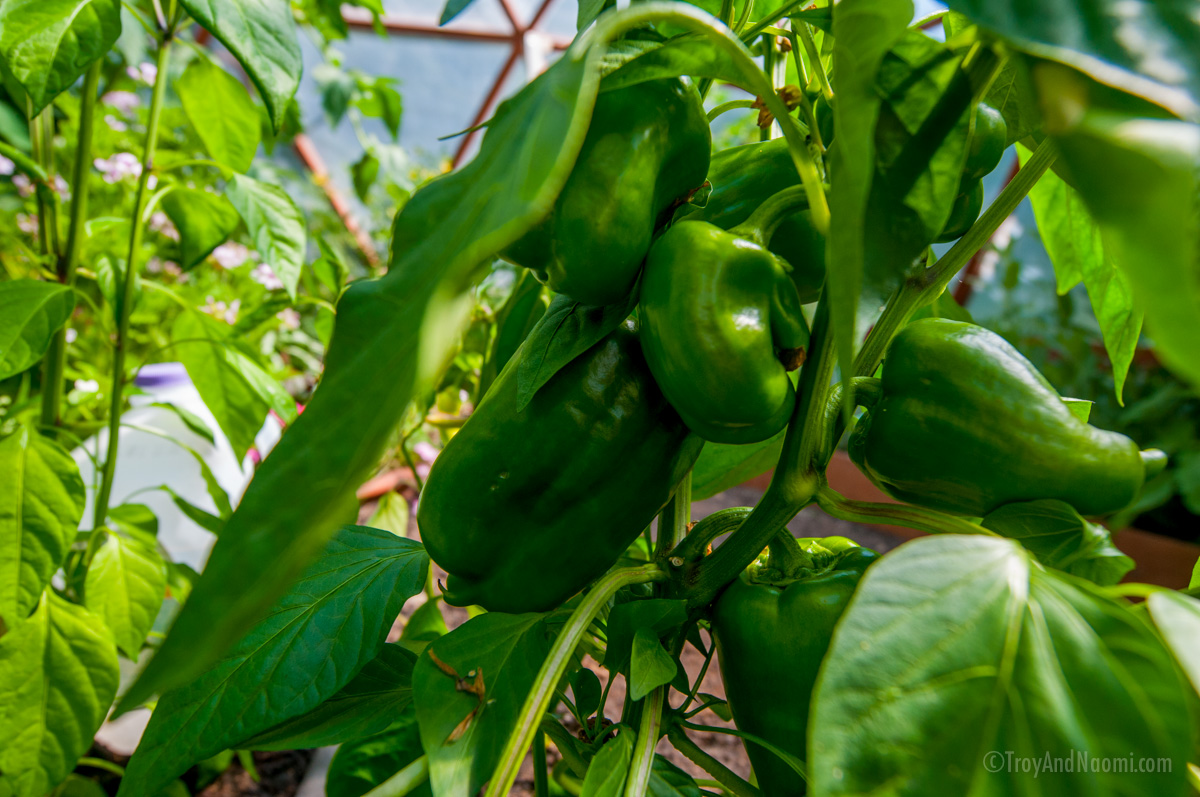
Bell peppers
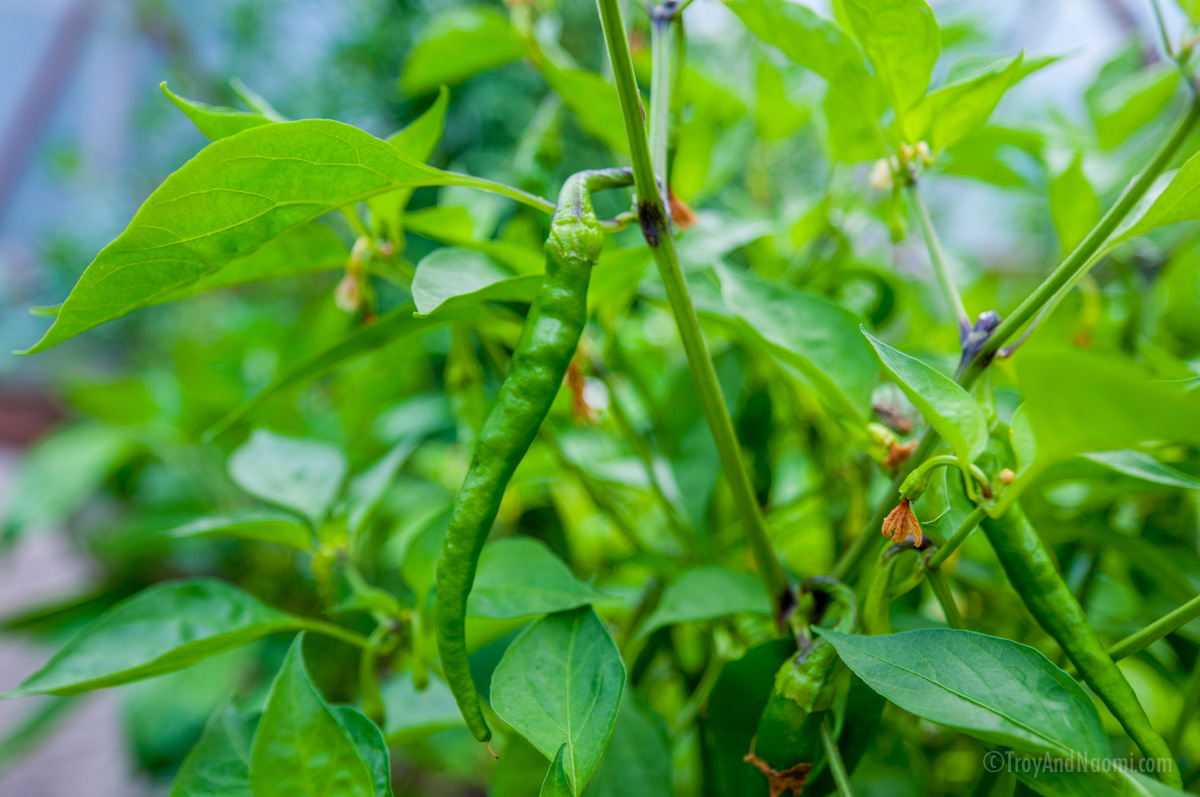
Chili Peppers
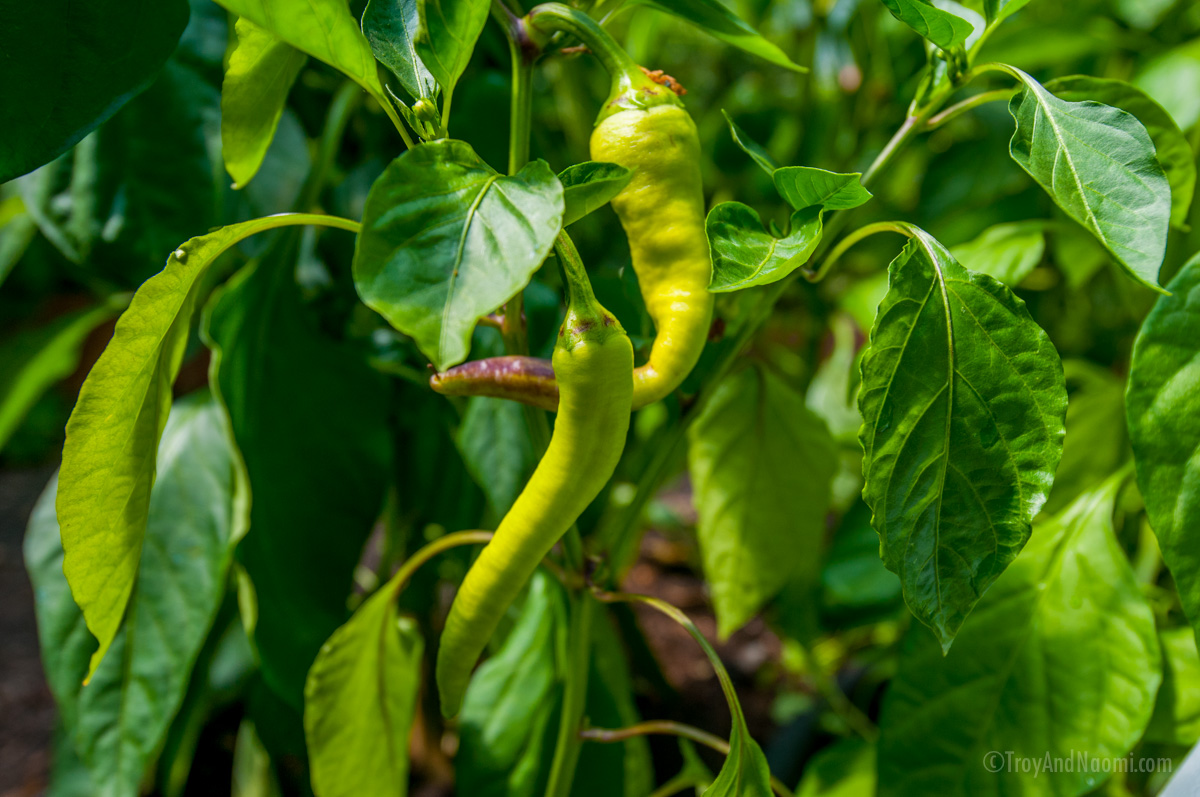
Banana Peppers
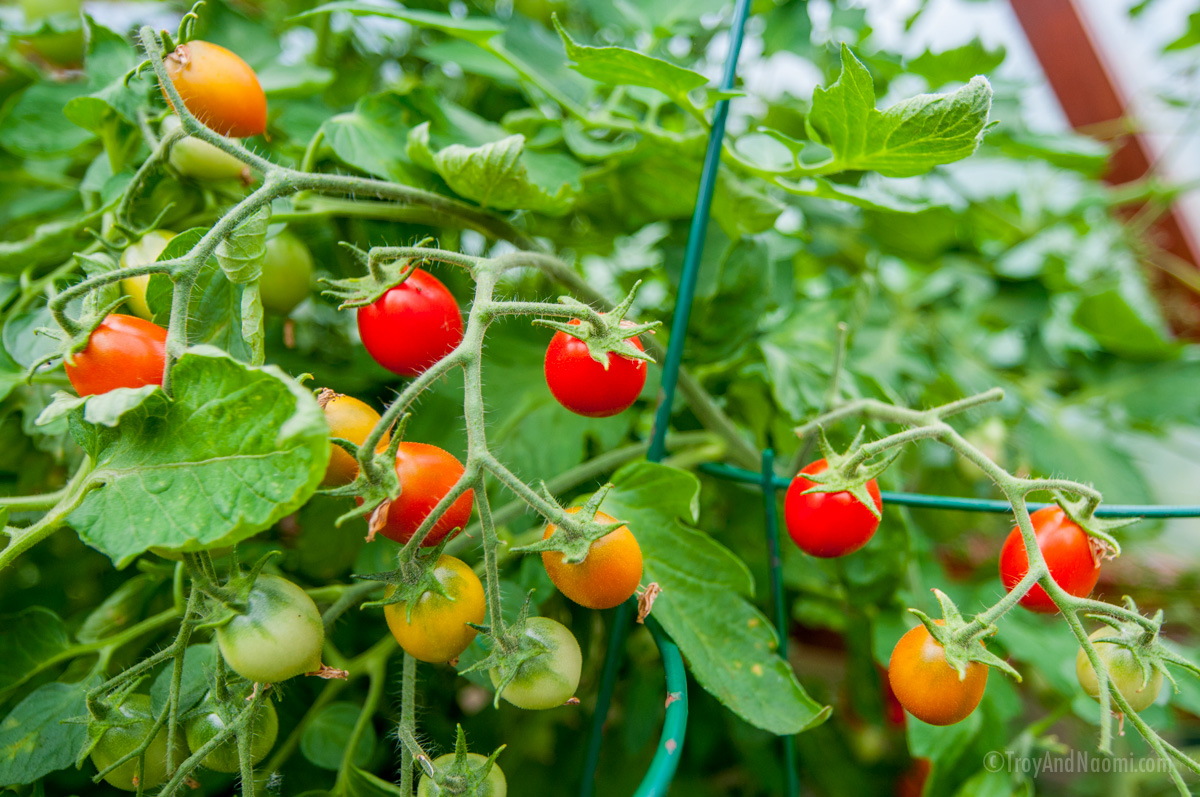
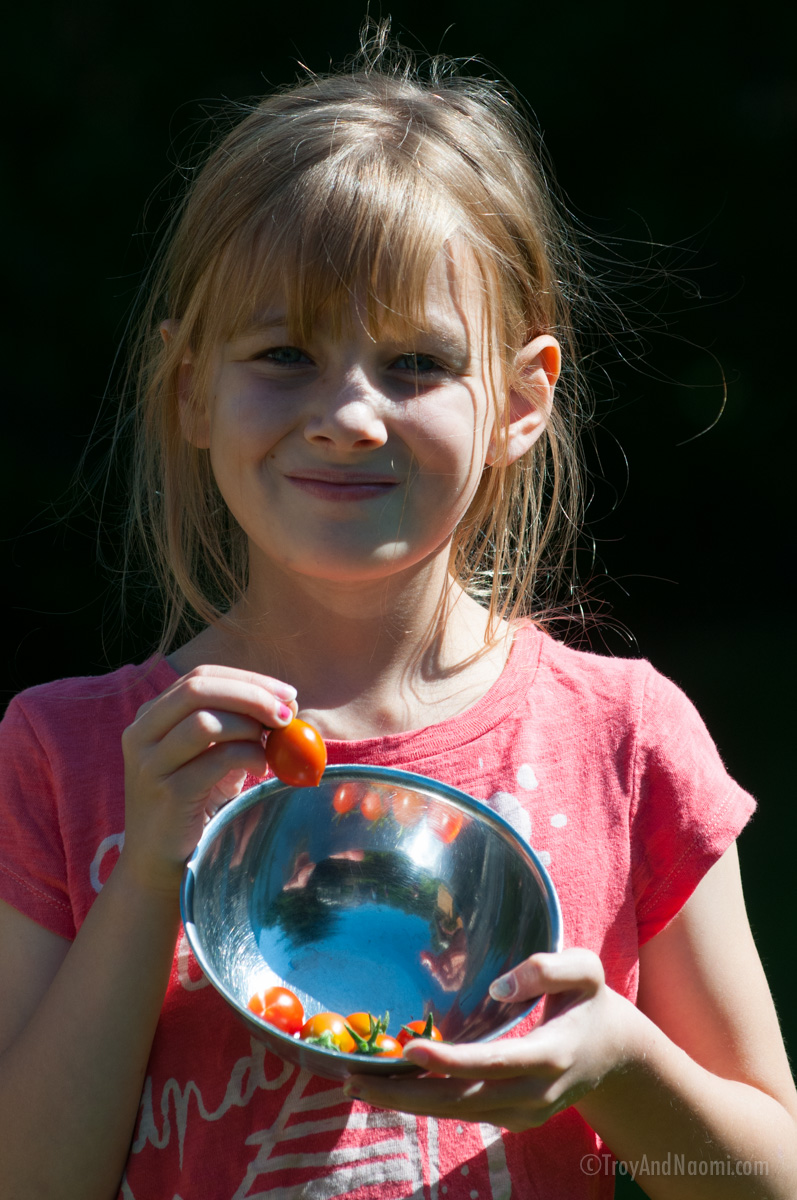
Cherry tomatoes
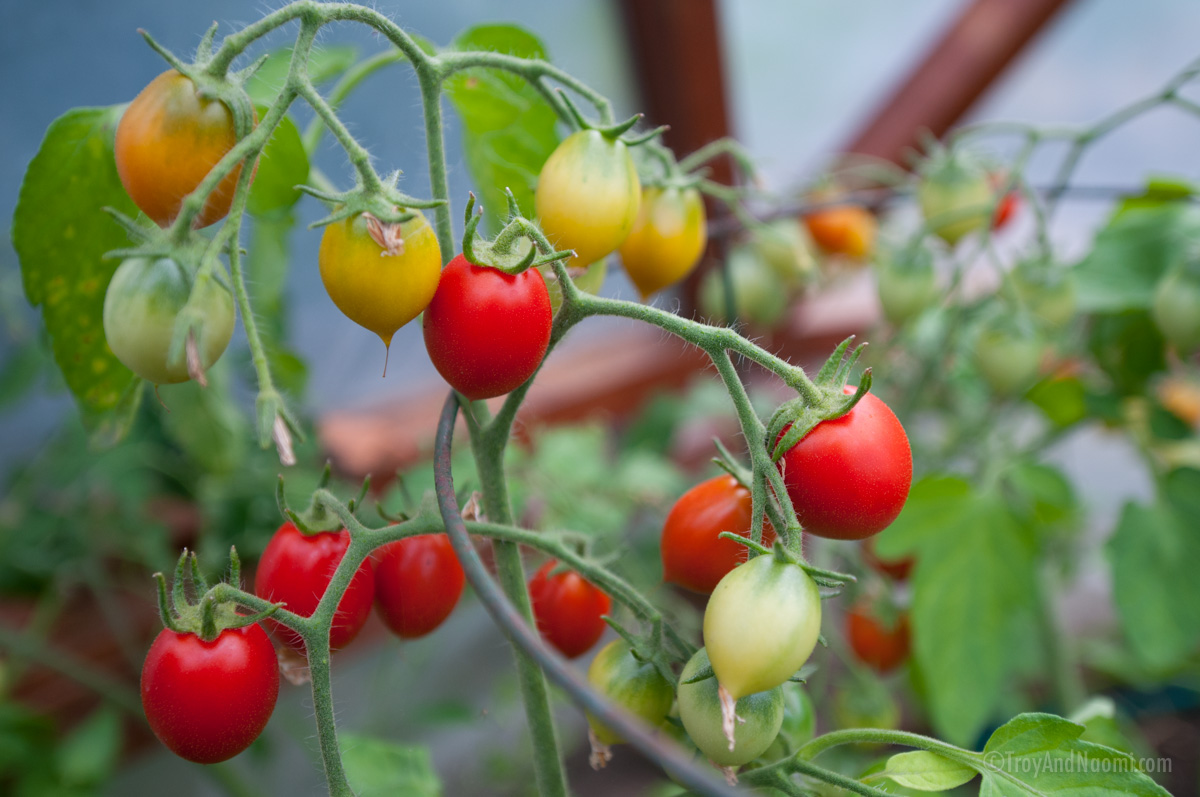
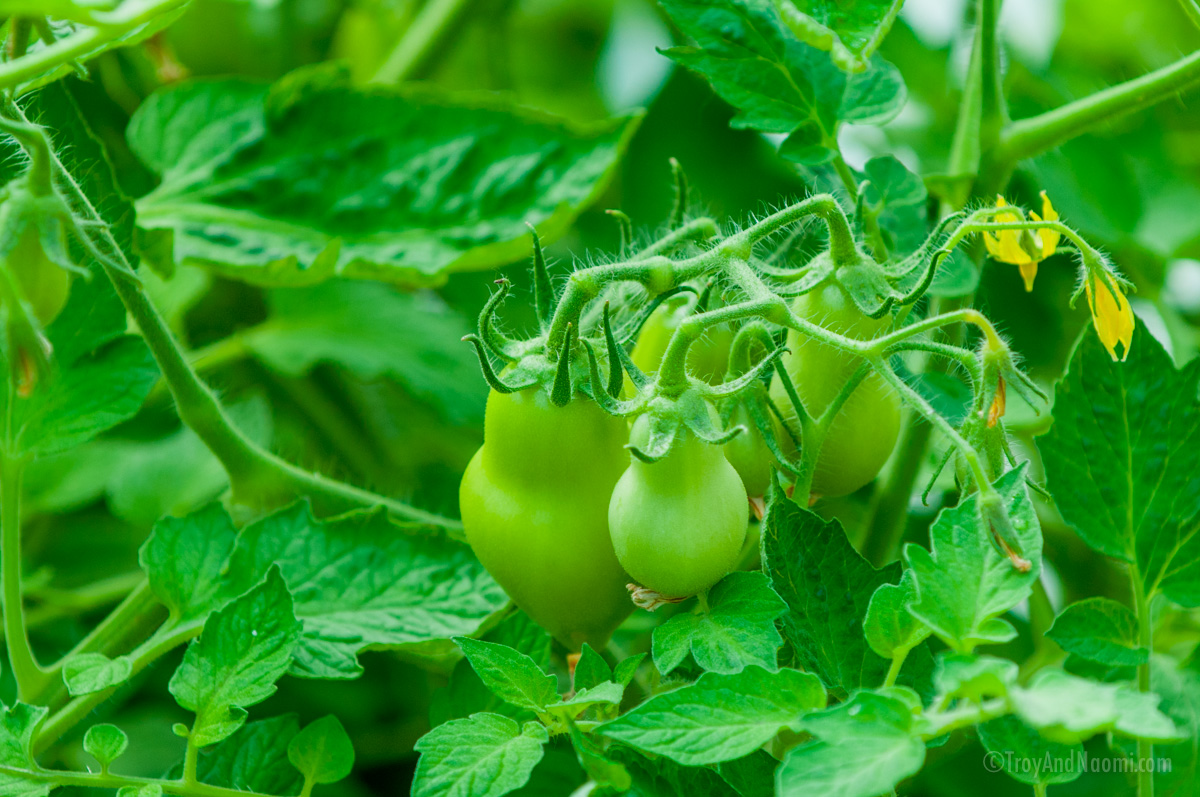
Lots and lots of tomatoes. The ones above are roma tomatoes.
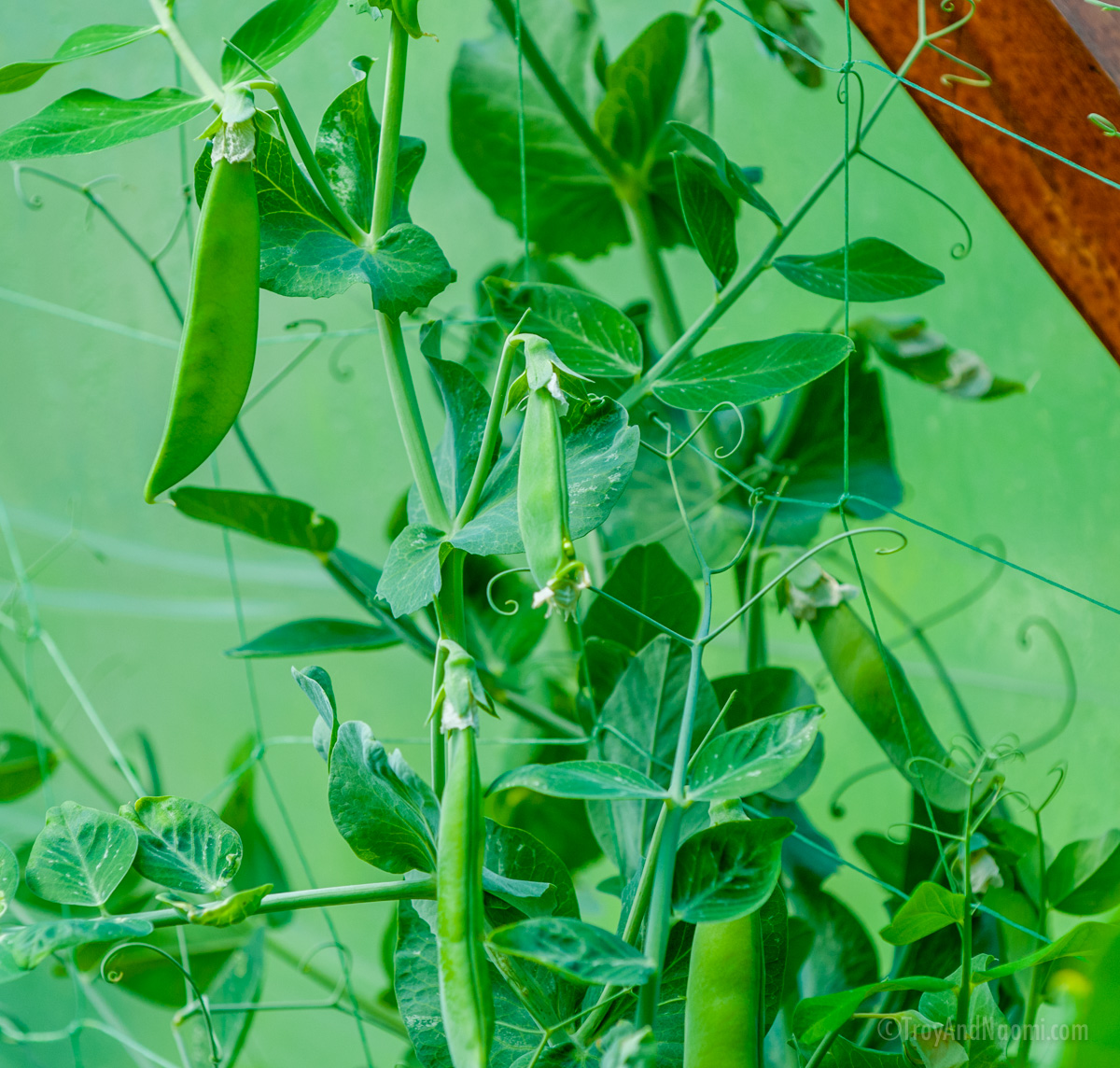
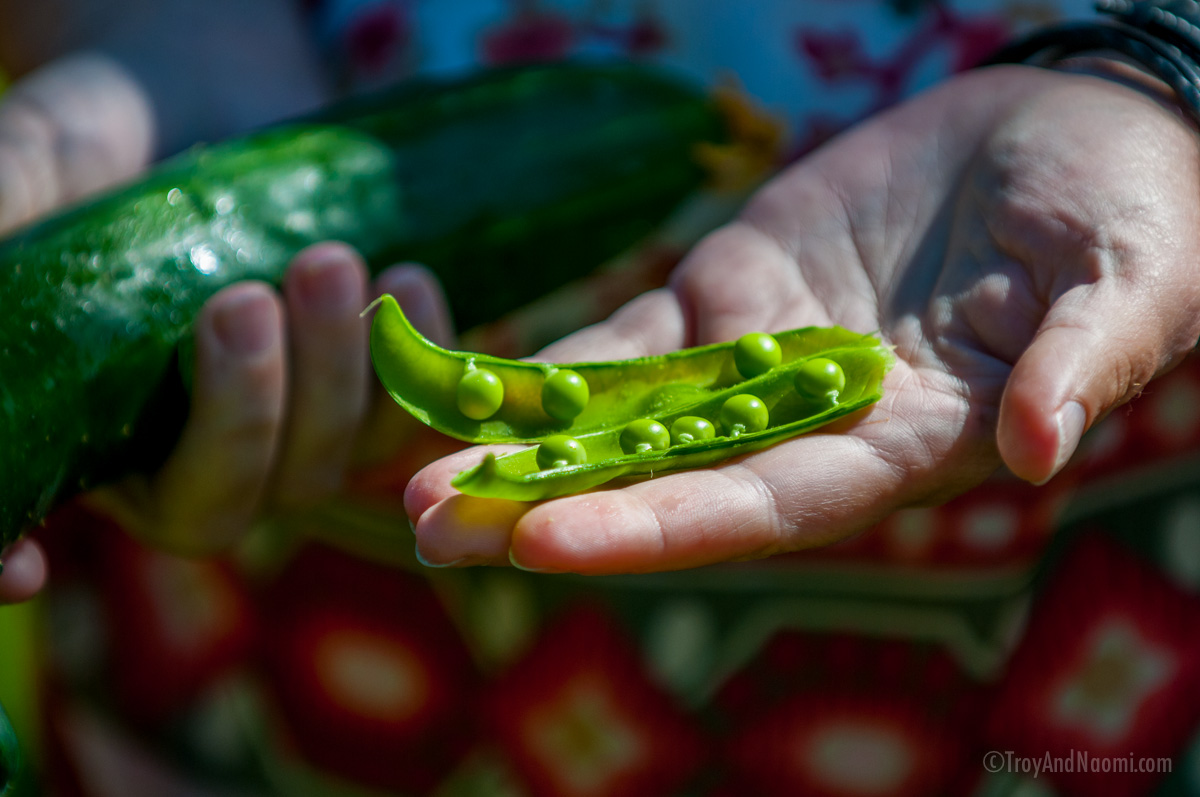
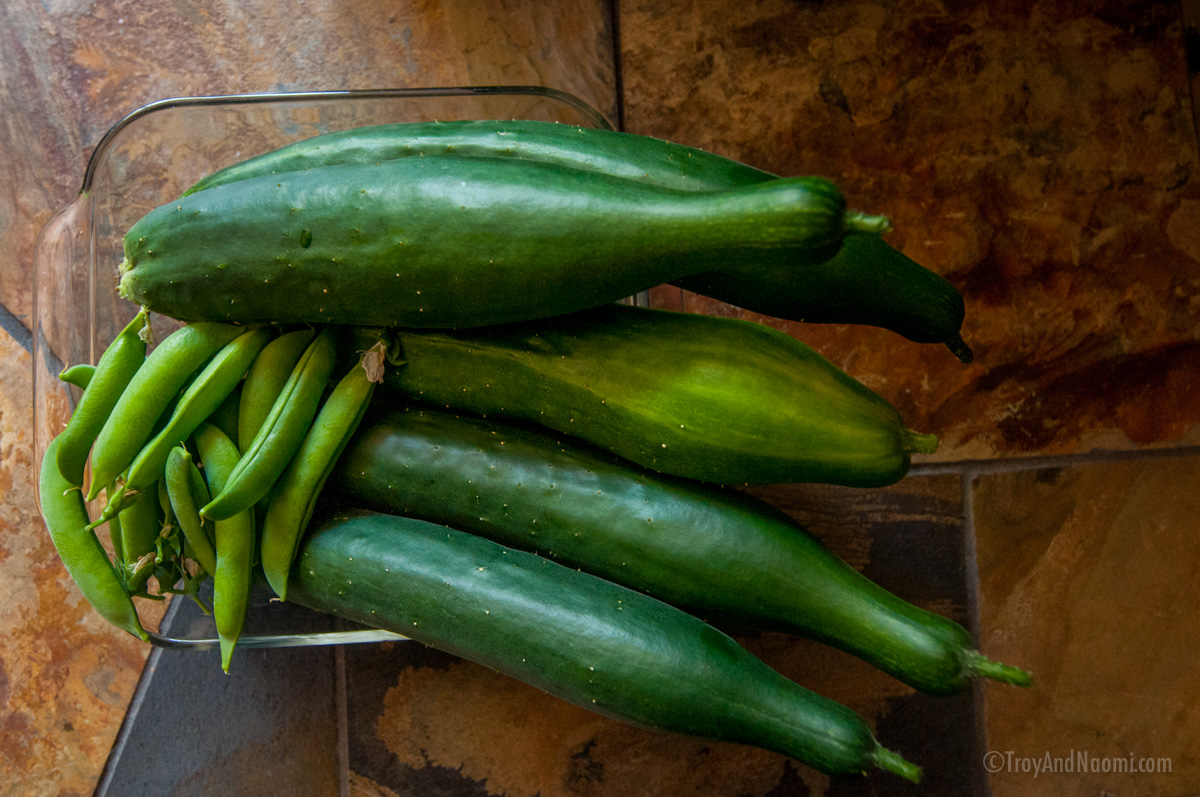
Peas
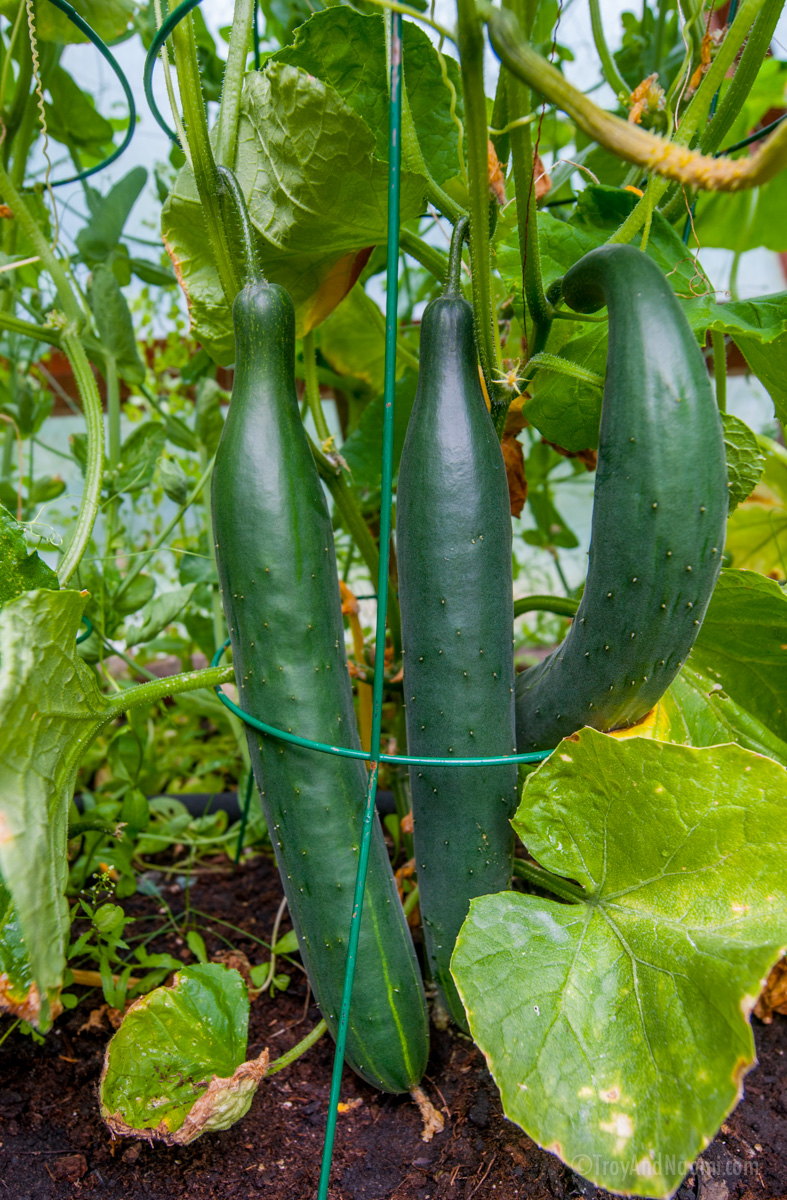
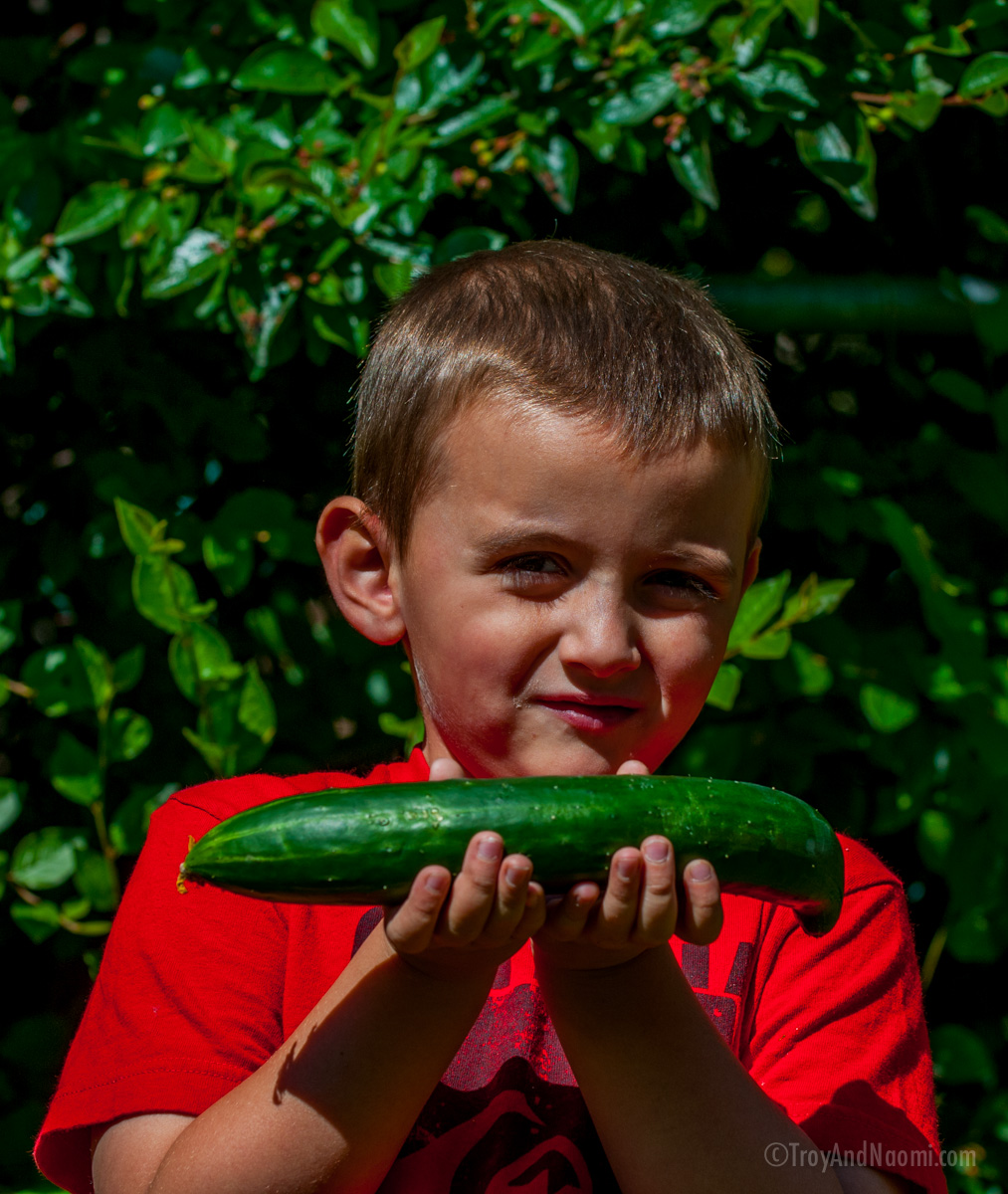
Cucumbers
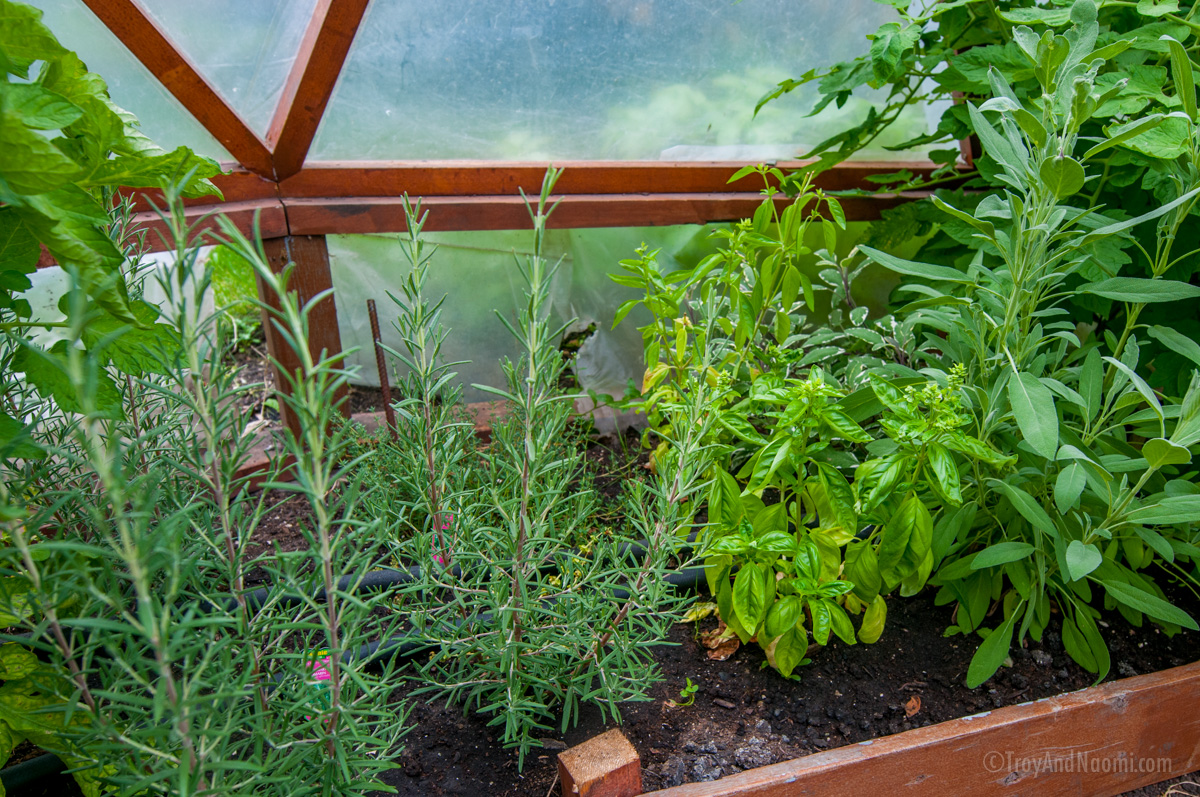
Garden fresh herbs – rosemary, oregano, 2 types of sage, 2 types of basil, and thyme.
We are very thankful to have it to protect the crop from nasty weather as the greenhouse has already withstood many rain and hail storms. The plastic isn’t really tight and has enough give in it to bounce off most hail, but if it gets extreme it will probably get shredded. I have seen hail around here strip the vinyl siding off of a house..
It is too hot right now, but later we will try planting some lettuce in the greenhouse so we can hopefully have fresh greens, hopefully right into mid to late fall.
We have already been enjoying eating quite a bit of fresh food from our green house, and are looking forward to the harvest to come. Along with the rest of the gardens, we have had some very tasty and nutritious home grown food!
We are back in Alberta after a very busy trip to Ontario and New Brunswick. Our trip spanned 3.5 weeks, many thousands of kilometers, and many, many encouraging visits with people.
Throughout the trip our kids did very good despite the travel, different sleeping arrangements, and meeting lots of new people. Naomi and I were very thankful for this and it made the trip much easier! Along the way they got to meet and play with lots of other kids, which was usually followed by comments like, “Will we see them again?” and “I’m going to miss them.”
Watching our plane
Most exciting thing about flying seems to be the tv…
Silly travellers
Ontario
In six days we made stops in Stouffville, Huntsville, and Owen Sound, staying two nights at each location. We were able to visit with some of Naomi’s family as well as many friends and supporters. On the Sunday we were thankful for the opportunity to fellowship with old friends (and make some new ones) at South End Fellowship Baptist Church in Owen Sound where we were involved for five years. I was able to give an update to the church on what is happening with our ministry and talk to a lot of people.
On the way to the airport that afternoon, we made a quick stop in Guelph to visit a friend from my youth. We were able to update each other on what the Lord has been doing in our lives in the last 20 years and it was a very encouraging visit.
Family in Huntsville
Fun Friends
Cooling off at WOLBI where we used to work.
Durham
At the petting Zoo in Stouffeville
South End Fellowship ready for VBS in Owen Sound
Visiting friends in Durham
Former neighbors
New Brunswick
The pace slowed down a little bit in the Maritimes, but there were still lots of people to invest time with, especially family normally only seen by webcam.
We gave updates at two churches in my hometown of Sackville, New Brunswick. Main Street Baptist Church is my home church and sending church, and Wood Point Baptist Church, a sister church and the first church I ever preached in. We were also able to crash the MSBC church picnic!
In our last ministry update we mentioned going to the opening of the park named for my father, but unfortunately it was not completed in time for our visit. We hope to stop by the Bill Johnstone Memorial Park next time!
Visiting my family
Story time with Grandma J
Breathing in that wonderful salty air!
Renewing old friendships at the church picnic
Anne with an ‘e’
Island girls
PEI Sunset
“Coincidentally” running into other missionaries from my home church on PEI.
Touring Sackville
Canada Day in Sackville
Family Time
Great Grandma J
Maritime delights that we ate: shrimp, Cows Ice Cream, Lobster rolls, grilled balogna, mussels, clams, and other deep fried seafood goodness!
Thank you!
Our trip (I hesitate to call it vacation) was so packed that we couldn’t cram much more into it anywheres (notice the proper Maritime plural of where). Our visits were often too short but the fellowship was sweet, and we hope to come back again in a few years.
Thank you for your prayers as we travelled, for the hospitality of those we visited with, and for the good memories of our time away from home.
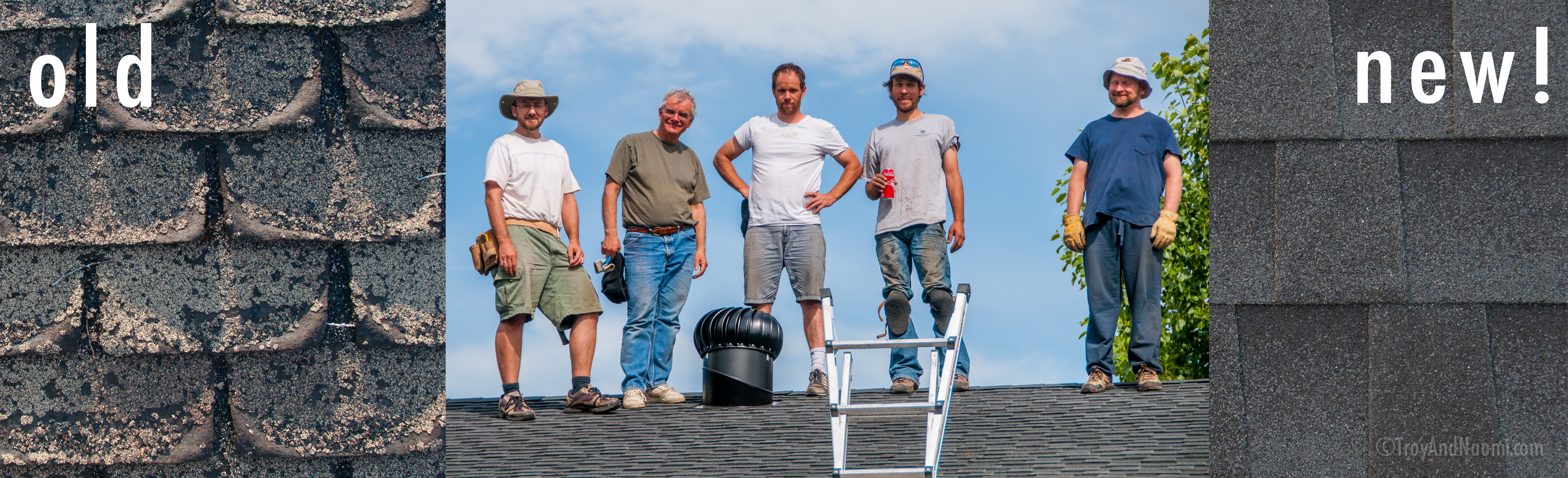
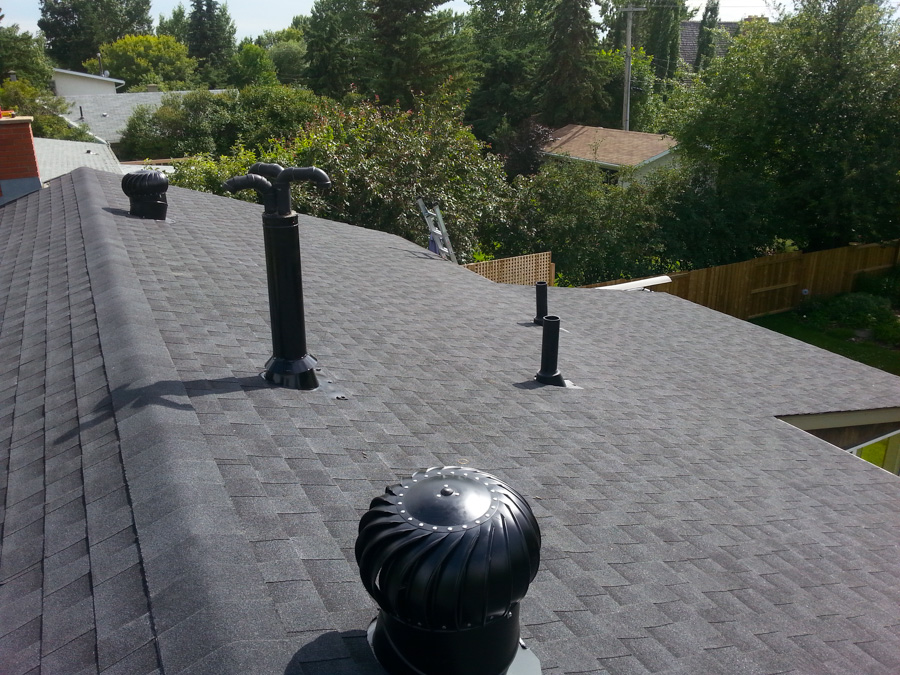
P.S. The week after we got back we put a new roof on the house! Thankful for the Lord’s provisions and to those who helped and for safety as we worked on two roofs.
Interesting in supporting the Johnstones? Please visit oneinsixty.com
Living in central Alberta doesn’t give us many opportunities to get to open water. Every once in awhile we find ourselves at a lake, but it just can’t compare to the ocean. I enjoy that salty smell, and water to the horizon too much. On our trip to the Maritimes we made sure we were able to dip our toes in the Atlantic. We visited seven beaches, some sandy, some rocky. Our first trip was less than 24 hours after landing at the beach in Cap-Pelé, just over the dune from a seafood restaurant. Mmmm…
Two days later we were back, just up the beach from the first place, but this time with swim suits.
itsy bitsy hermit crab
big hermit crab
More fried clams
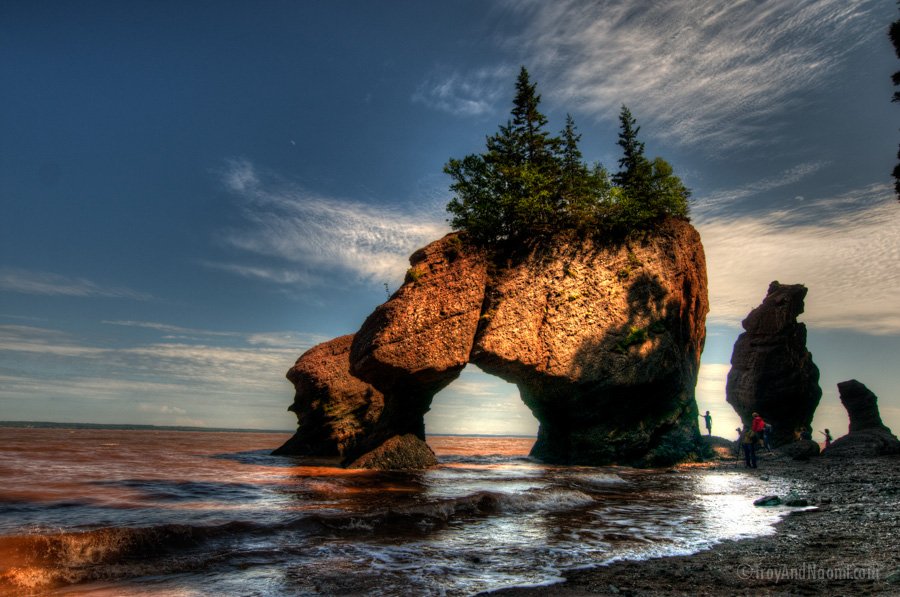
Two days later, we went to a very different beach, this time on the Bay of Fundy. It was a cool, windy day at the Hopewell Rocks, but we enjoyed lots of beach combing.
Incoming tide
Hopewell Rocks
Ellie
Adelaine
Ethan
somebody’s shoes
Two days later (seems to be a theme…) we went to Slacks Cove, also in the Bay of Fundy.
Slacks Cove
crazy family
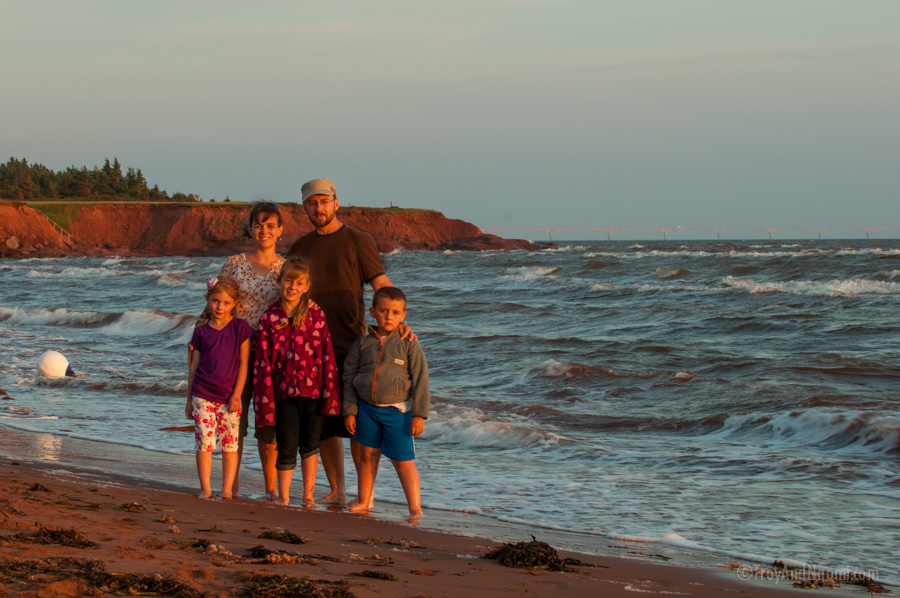
From Naomi: “I love this picture, not just because of the crazy kids and amazing husband in it, but because it was taken at Slack’s Cove. Slack’s Cove is the beach where Canada’s first Baptists arrived and settled. They founded the church that eventually became Troy’s home church of Main Street Baptist Church. It reminds me that just as the faithfulness of those 7 little-known individuals several hundred years ago is still bearing fruit today, so the Lord will help us bear fruit that could impact others long after we’re gone, as we walk with Him. So, keep keeping on!!”
The next trip was a brief stop on the New Brunswick side of the Confederation Bridge.
On the other side of the Northumberland Straight are many lovely Prince Edward Island beaches. On our way back home, we stopped by Chelton Beach Provincial Park just before sunset.
levitation
Jellyfish – like an eye
E insulting the waves to make them bigger…
Seacowhead Lighthouse
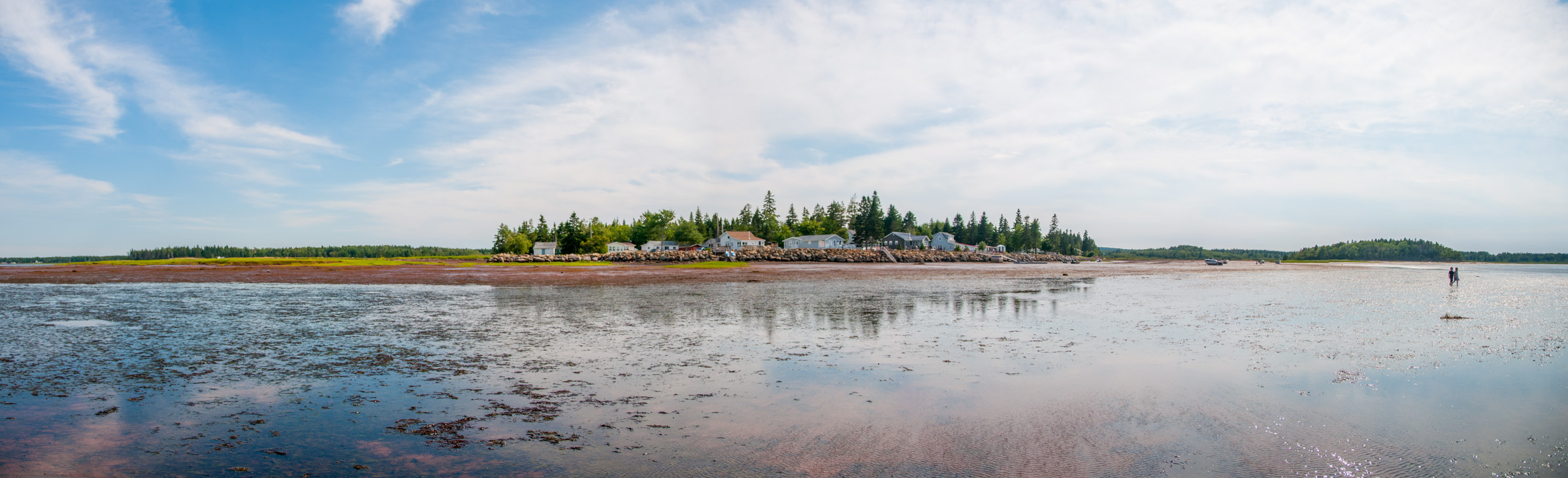
The last and final trip to the Atlantic was to my old beach, Masons Beach. This is where I spent lots of time as a kid at our cottage. A small, (mostly) quiet beach for long summer afternoons. It was nice to take my family to a spot where I have so many memories.
The tide was going out, but we still had fun hunting hermit crabs, finding shells, and sharing stories of ye olden days. Thanks to the Pooleys for hosting us and the awesome surf-n-turf supper. And the great memories!
A hermit crab changing shells
Eating clams and mussels picked from the beach
We came back to land-locked Alberta with a few kilos of shells, beach glass, drift wood, a heavy bag of sand, and lots of great memories. So long, ocean, sea you in a few years!
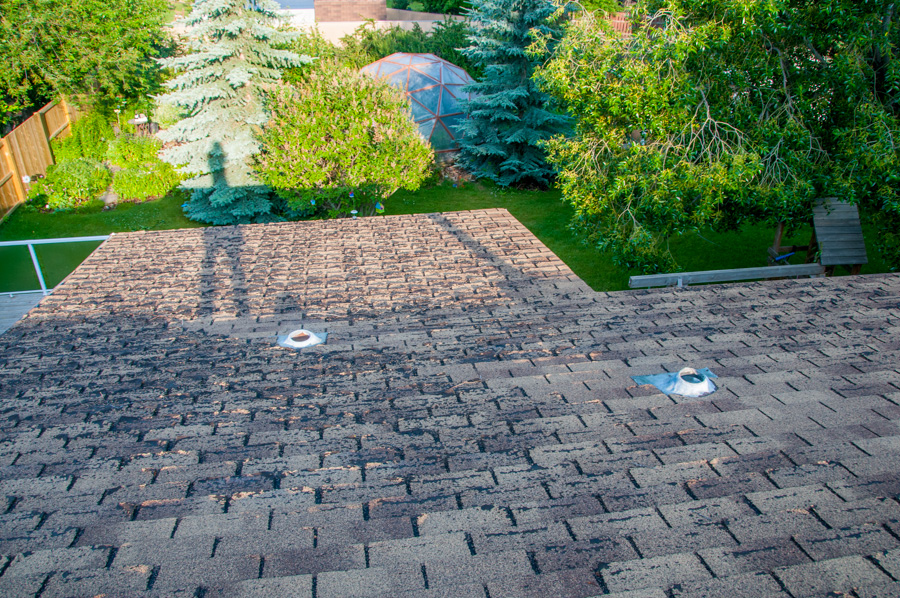
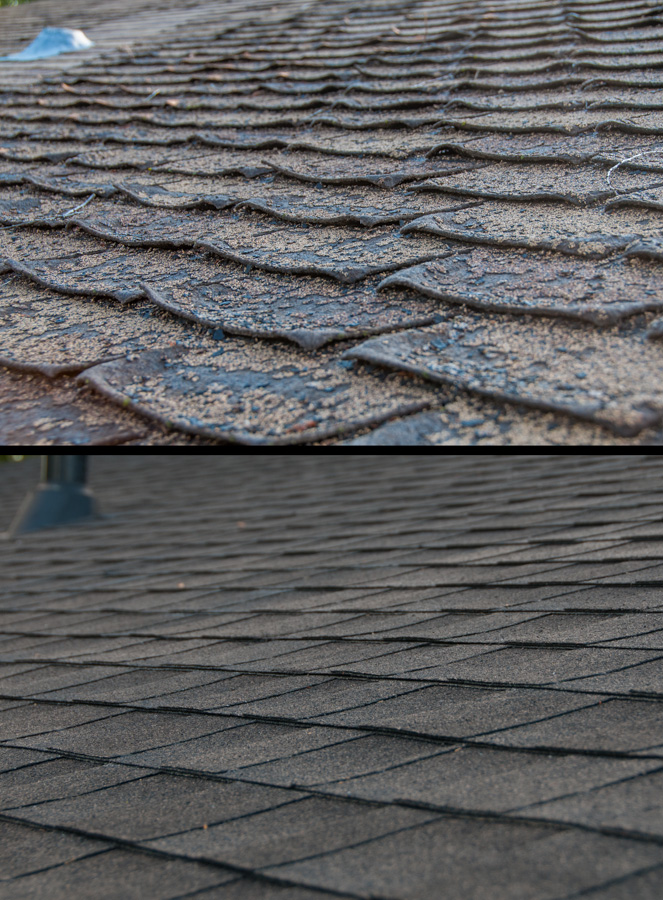
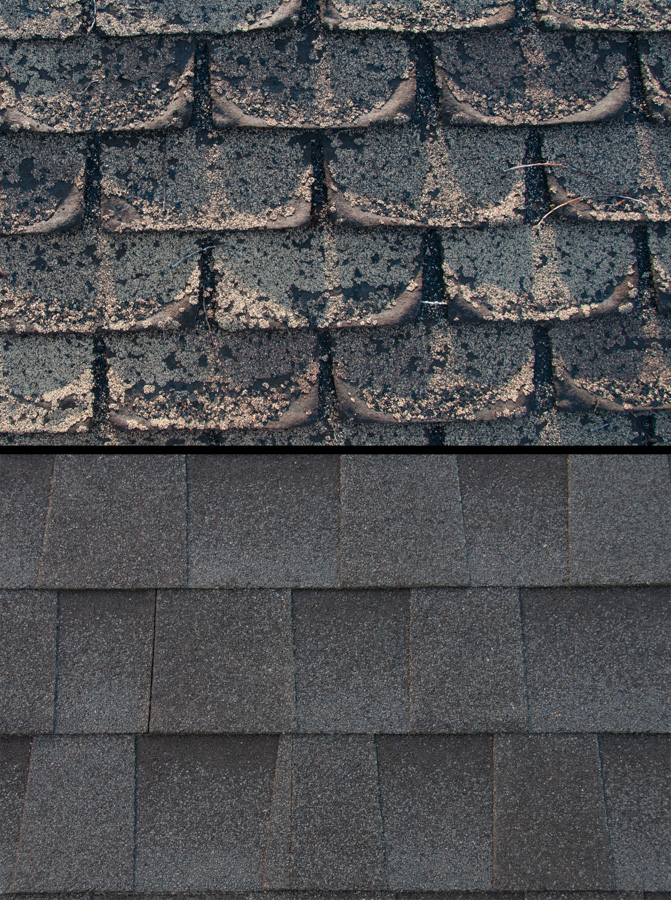
It is raining outside this morning and I am very thankful to be sitting here under a new roof. When we bought this house four years ago, the home inspector told us it would need a new roof in a few years, and this was the year. It was really past time for many of the shingles on the back side of the house.
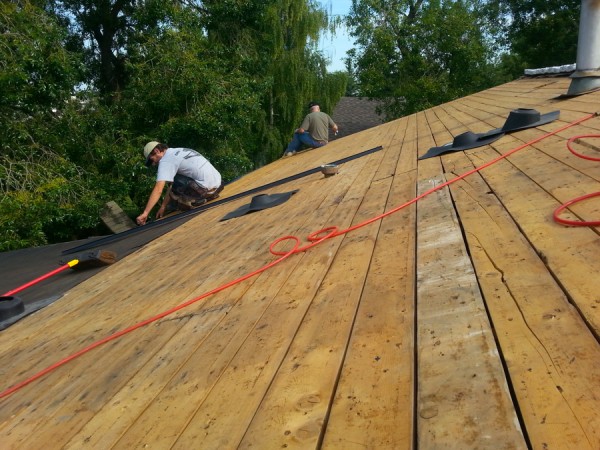
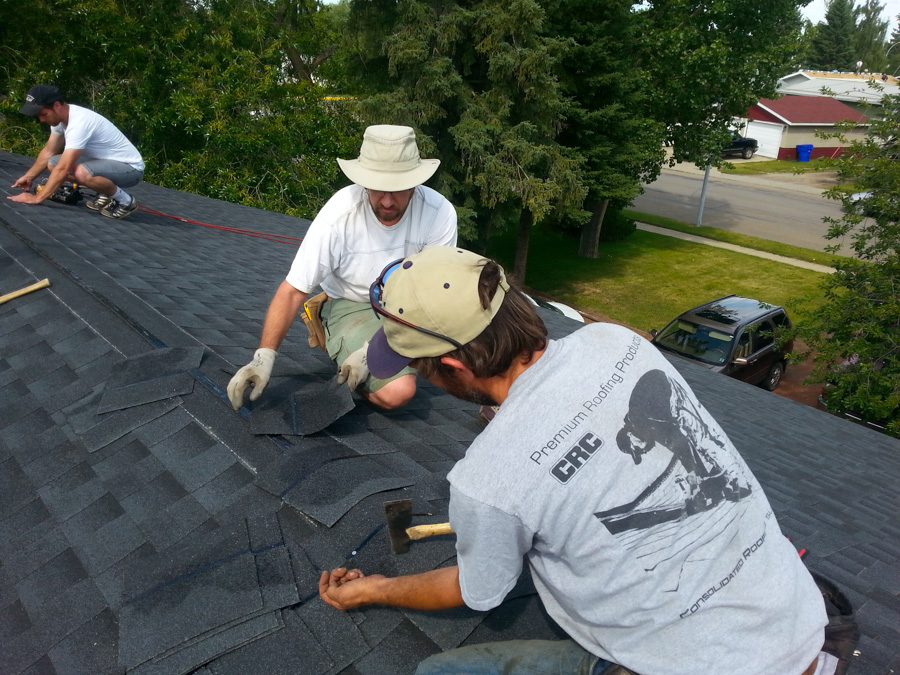
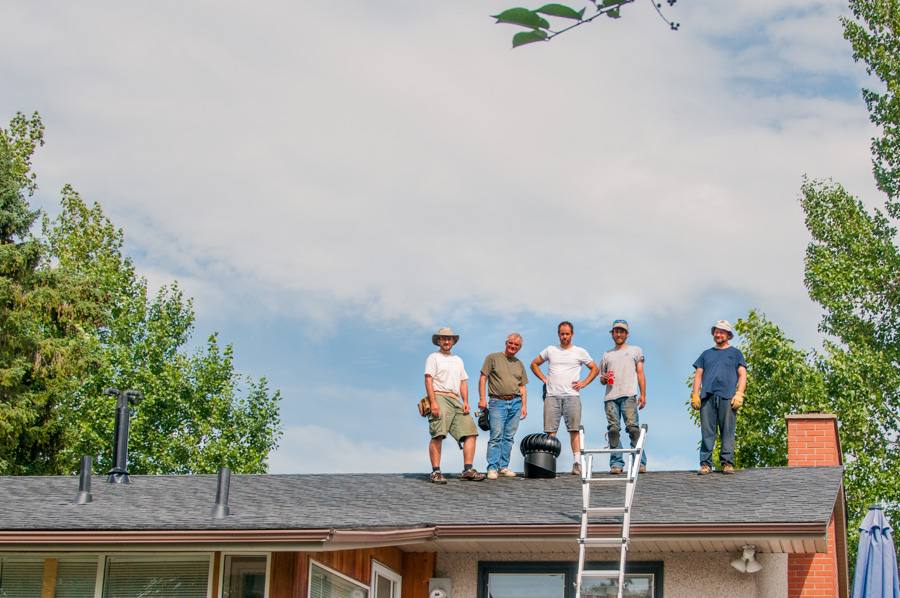
We spent one day doing my roof and two days doing a roof and garage at my father-in-law’s house. Thank you to my new friend, Amorel from Fortress Roofing, and John, Andrew, and Steve for your work on our roof and John’s. Great working with you and great to have it done!
Canadian War Museum