Playing around with my phone’s camera and an app that makes it possible to create a photosphere. To the greenhouse!
The greenhouse is making its transformation into a regular jungle. I took this photo awhile ago, and things are even bigger now.
Playing around with my phone’s camera and an app that makes it possible to create a photosphere. To the greenhouse!
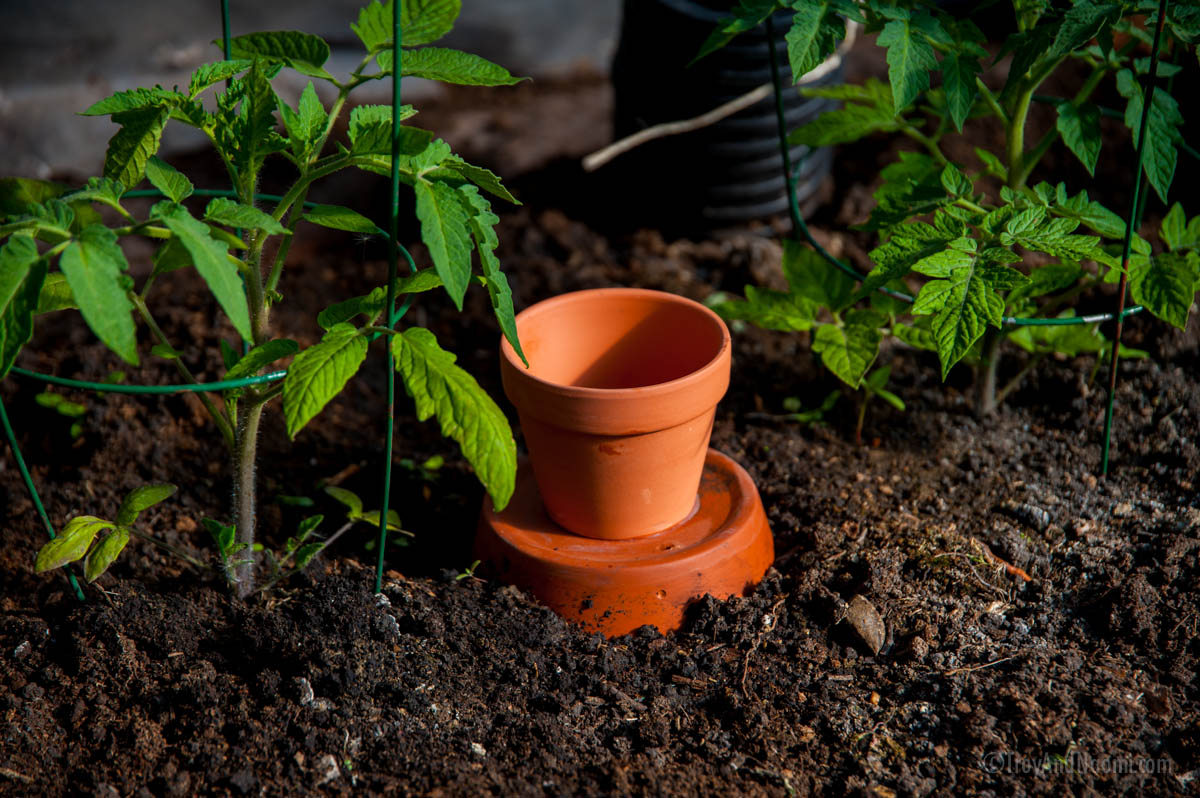
Ollas, (pronounced “oy-yah”) are a water conserving method of garden irrigation. Basically, it consists of terra cotta pots buried in the ground and filled with water. Since terra cotta is permeable, the water is drawn out as the soil dries. Plants near the ollas will get a more consistent source of water, which some plants really do well with. The more the plant needs, the more it draws. Theoretically, ollas use up to 50-70% less water and can deprive weeds of moisture by keeping the water down under ground = less watering, less weeding.
I first heard about it here (waldenlabs.com/the-most-efficient-irrigation-system-in-the-world/) and really liked the idea. Last summer we set up the greenhouse and went away for a month and it was a lot of work for someone to water. We wanted to have some system that we could leave for a few days, efficiently water the gardens, and hopefully reduce work. I could have just used a timer and a drip irrigation system, but I don’t like the idea of leaving the water turned on while we are away from home. When I read about ollas, I thought this might be the answer.
We decided to make our own ollas rather than order them for around $30 each. This means they are a bit smaller, and more water is distributed near the surface than the lightbulb shaped ones you can buy, but they are also way cheaper to make.


We made sure to use a silicone that is not toxic – we found one that is often used to fix fish tanks. We also drilled a small hole near the top to allow air out when filling. The kids are often given the job to fill them up and they can usually go a couple days before they need to be topped up again.
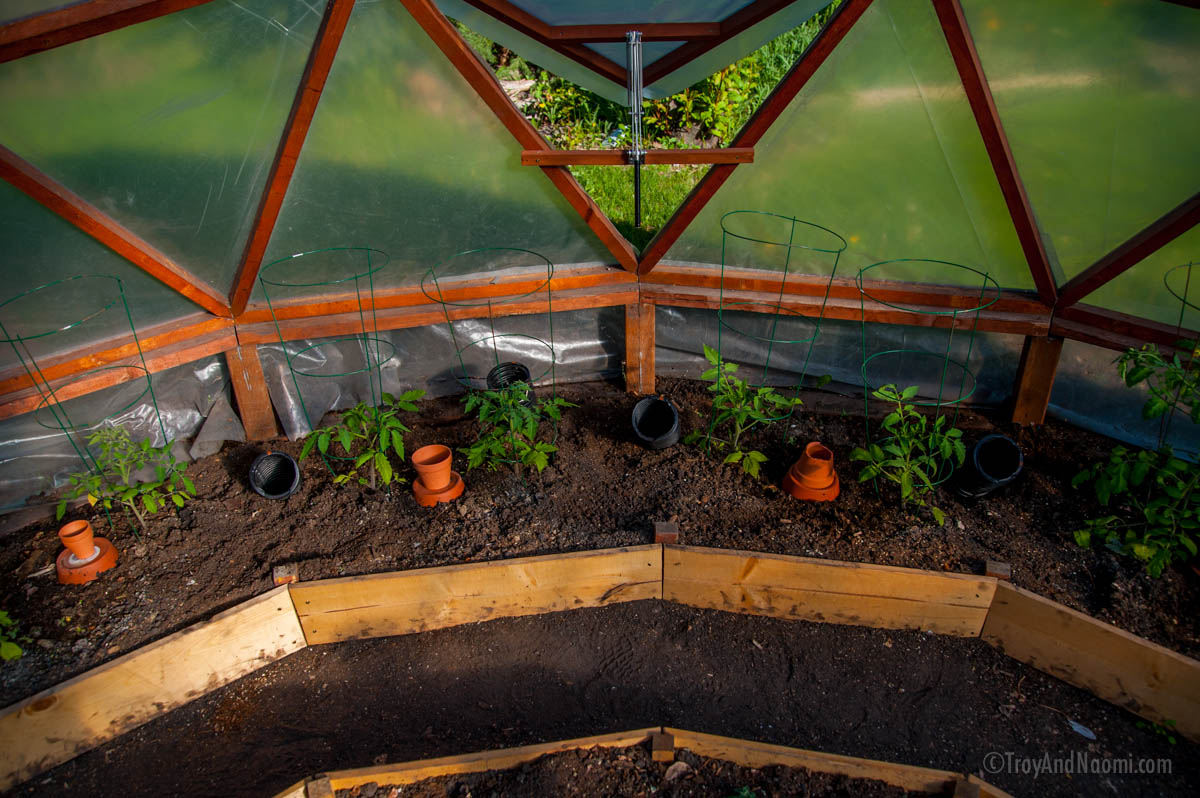
So far the ollas seem to be working well for us. We’ll see how it goes during the hot part of the summer, but next year I would like to try making more of them and a bit larger.
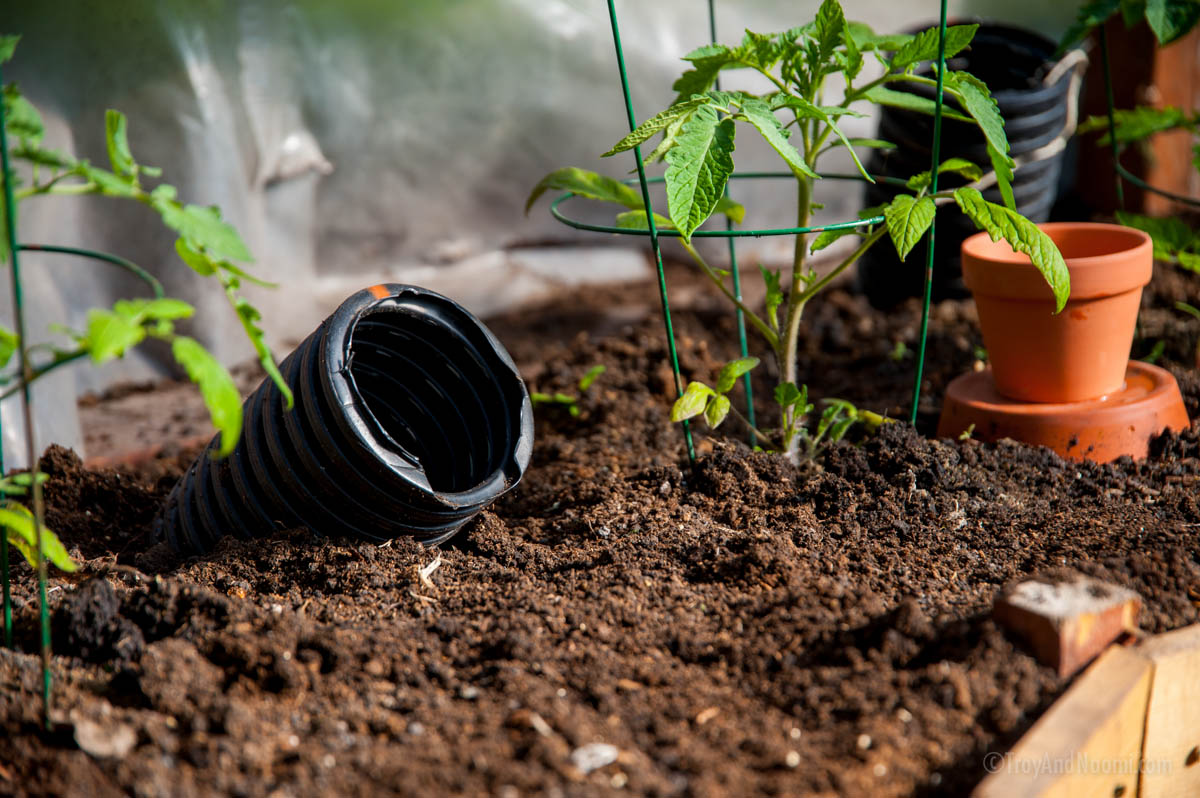
This is our second summer with our geodesic dome greenhouse, and I’m doing something a little different this year. A common problem in small greenhouses is regulating the heat, either too much or, as is often the case in Alberta, too little. Thermal mass is a great way to do smooth out those fluctuations, and we have a large water tank that we use to help with it, and also small milk jugs full of water right next to plants to absorb heat during the day and release it at night. Last year, we had a crazy freeze happen in September, and I knew I needed to do more to store heat inside the greenhouse. One idea I had heard about is a Subterranean Heating and Cooling System.
Basically, a SHCS uses a fan to pump the hot, humid air inside a greenhouse underground through tubes that will use the soil as a big heat sink. During the day the hot air goes underground where it cools, transferring it’s heat to the soil, and when it exits the tubes the air functions as a cooling system inside the greenhouse. At night, the effect is the opposite; the air inside the greenhouse cools quickly, but the air coming out of the tubes in the ground will be warmer with the stored heat from earlier in the day. Here in our part of Alberta, even in the middle of summer, it isn’t uncommon to have night time temperatures around 10C or less and the air coming out of the SHCS should be warmer than that. Yes it is complicated, but the science is sound and I know it works. At least that is what I had to keep telling myself as I dug down 70 cm to bury the pipes! Whenever I tried to describe the system to someone they looked at me like I am crazy. As I was digging I wondered if I really was. Crazy.
If you want to see a thorough analysis of this kind of system complete with temperature graphs, here is one built in Scotland: www.permaculture.co.uk/sites/default/files/Solar_Greenhouse_Article_Web_Ed.pdf
Another advantage of this kind of system is that it will warm your soil up quicker in the Spring. Here are some observations reported in the above article:
“By March 21st the average greenhouse soil temperature at a depth of 76cm (30in) was 16° versus 6.5° in the soil outside, representing stored heat of around 49kW hours.”
Those are some pretty good results!
Given the circular shape of our greenhouse, and the fact that I didn’t want to dig up the whole thing down to that depth, I only used five tubes, two along each side of the outer ring of the greenhouse, and one coiling in the centre section.


Digging down to 70 cm means I was past the rich, black soil and into the clay. I tried to keep the clay in one pile to pack back down around the tubes, but it inevitably got mixed in some with the other soil. The first two tubes I excavated all the soil and clay under the growing bed, but after that I just removed the soil and dug smaller trenches in the clay where I wanted the tubes as I was running out of space to pile the soil up.


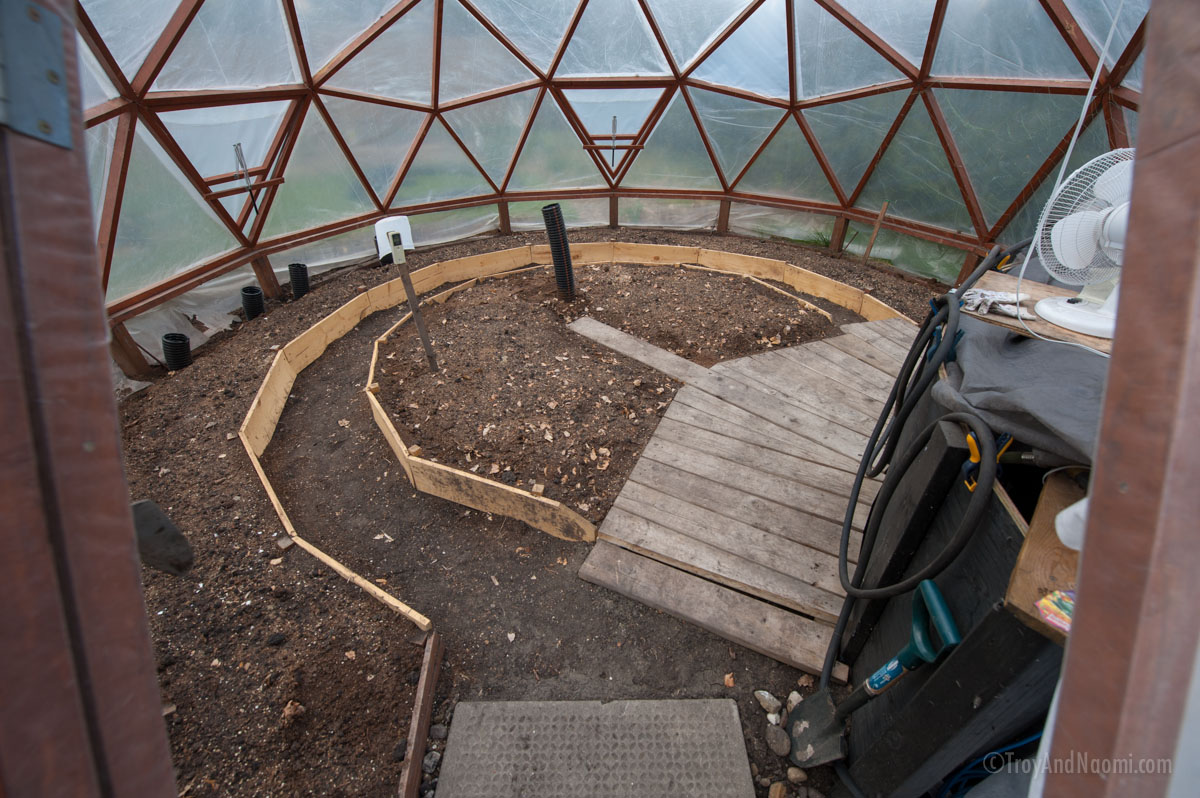
The completed system with the buried blue can, and a black can on top:
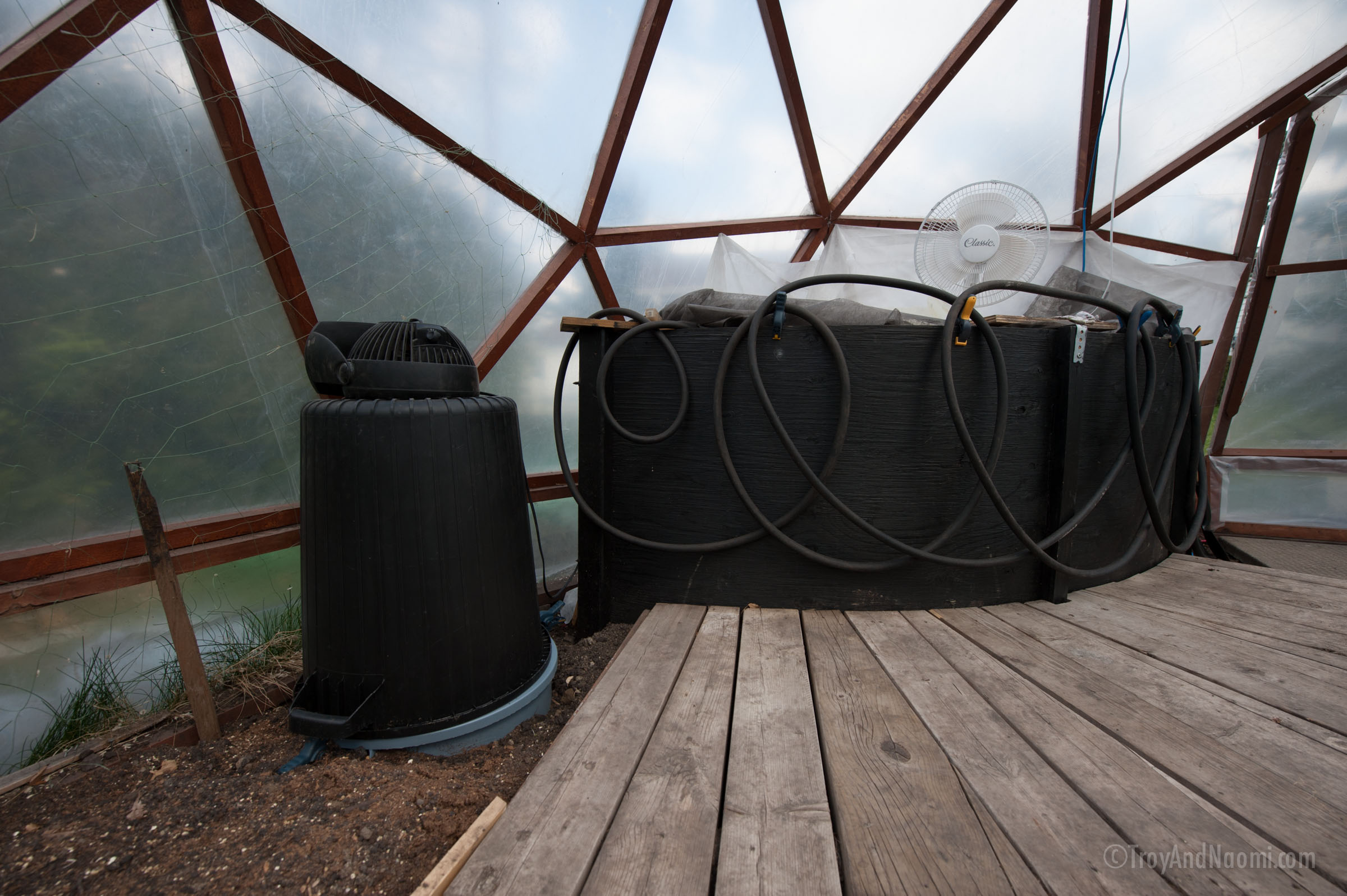
The fan is on top of a second garbage can to get it up higher into the warmer air. The black can will also absorb some heat on a sunny day which further heats the air as it goes underground. On day when the temperature was 23C (73F) outside, and inside the greenhouse it was 32C (90F), air coming out of the tubes was only about 16C (61F). The large black thing to the right is a water tank with loops of a black garden hose for the water filter. It also helps absorb some light energy and radiate it back at night.
There is a lot more I could have done for this project (insulate along the outside of the trenches, solar powered fans, more tubes, etc), but as this isn’t going to keep the greenhouse going in the winter in a 3a hardiness zone, and I was simply running out of time to dig. The five tubes will be enough for us. I’d like to add a temperature controlled switch for the fan, but for now it is simply on a timer.
We already had to rely on it one night as it got down to -3C (26F). Naomi took frost cloths and covered the plants, and the heat being pumped up from underground and blowing under the frost cloths kept everything warm enough. This should be a big help near the end of the growing season.
Fall Update:
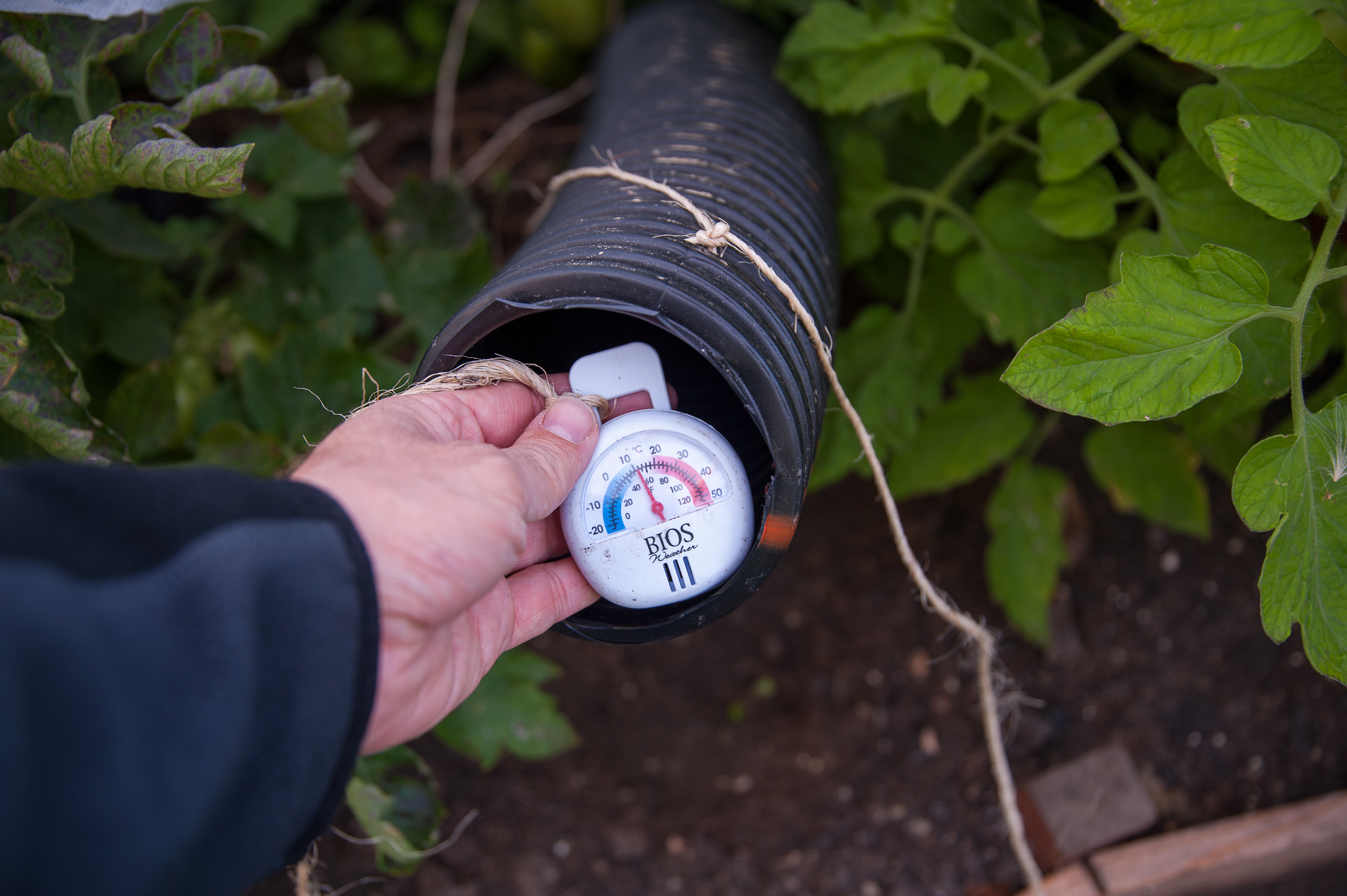
Early one September morning our outdoor thermometer said it was 0.8C outside. The greenhouse was 6.7C. The subterranean heating/cooling system was doing it’s job! I have a thermometer on a string that goes way down in one of the tubes. The air coming from underground this morning was still 10C.
With early October underway, our growing season is pretty much over now and we are so thankful for the harvest that we have been enjoying!
We really wanted to have a greenhouse to help extend the shoulder seasons and for protection from frost, but we didn’t expect how badly we would need it with snow and heavy frost in early September.
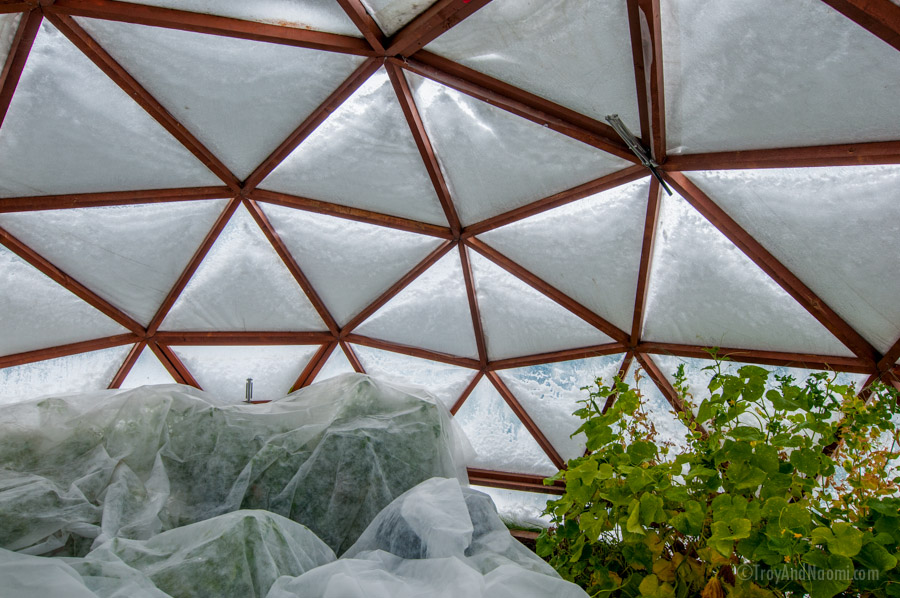
Frost blankets, two extra garbage cans full of water, and a heater running to keep everything alive through the cold snap! We knew this cold would be over in a couple days and we could expect several more weeks of warmth for the growing season if we could just get through this.
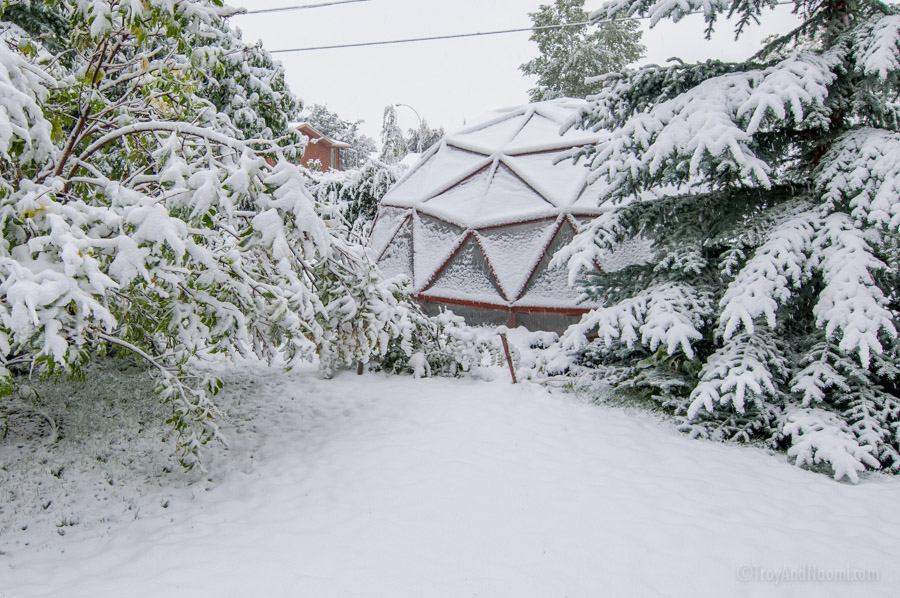
The gardens outside buried in early September snow.
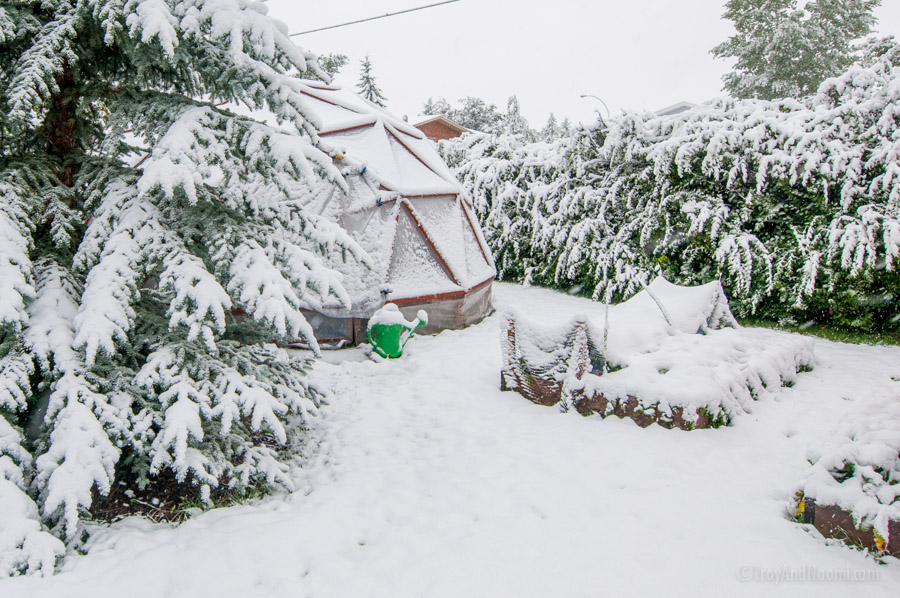
Everything in the greenhouse survived and the plants in the raised beds (strawberries, lettuce, beets, carrots) came out fine. We pulled up the onions right away after the snow was gone, and they are drying in the basement. After the cold snap, we had several more weeks of our growing season.
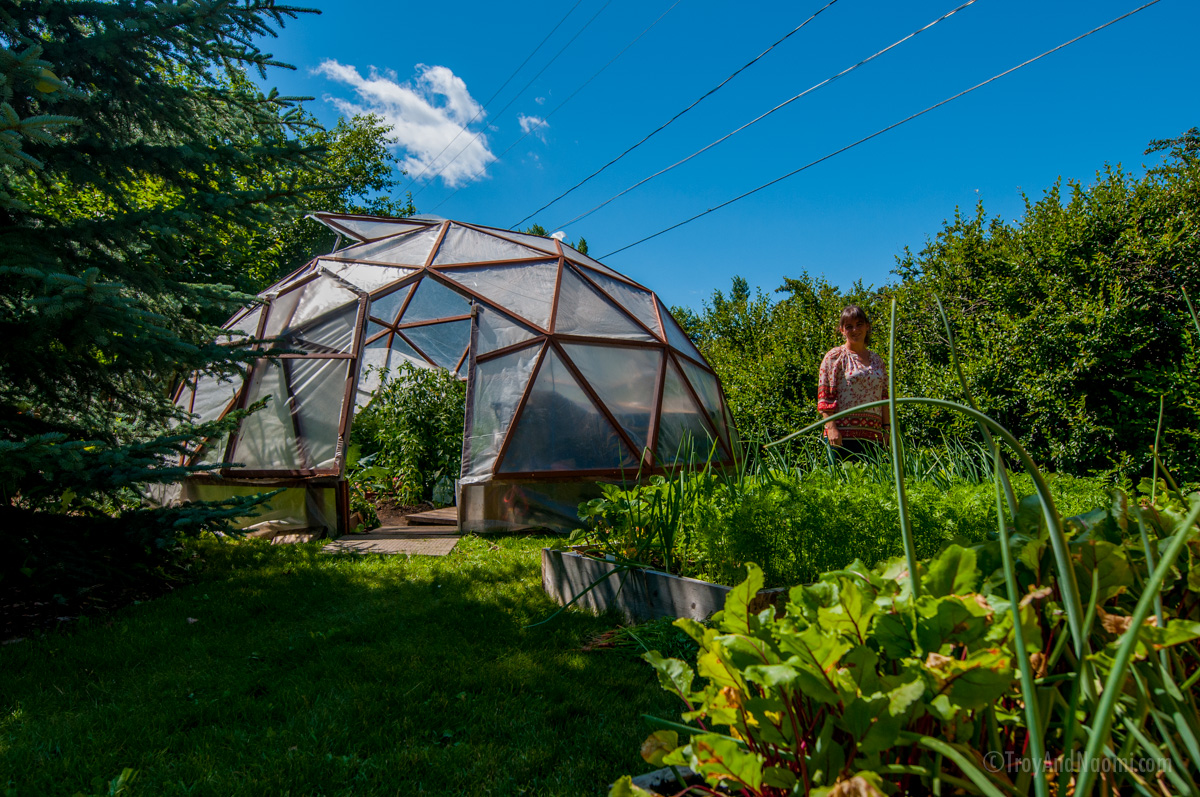
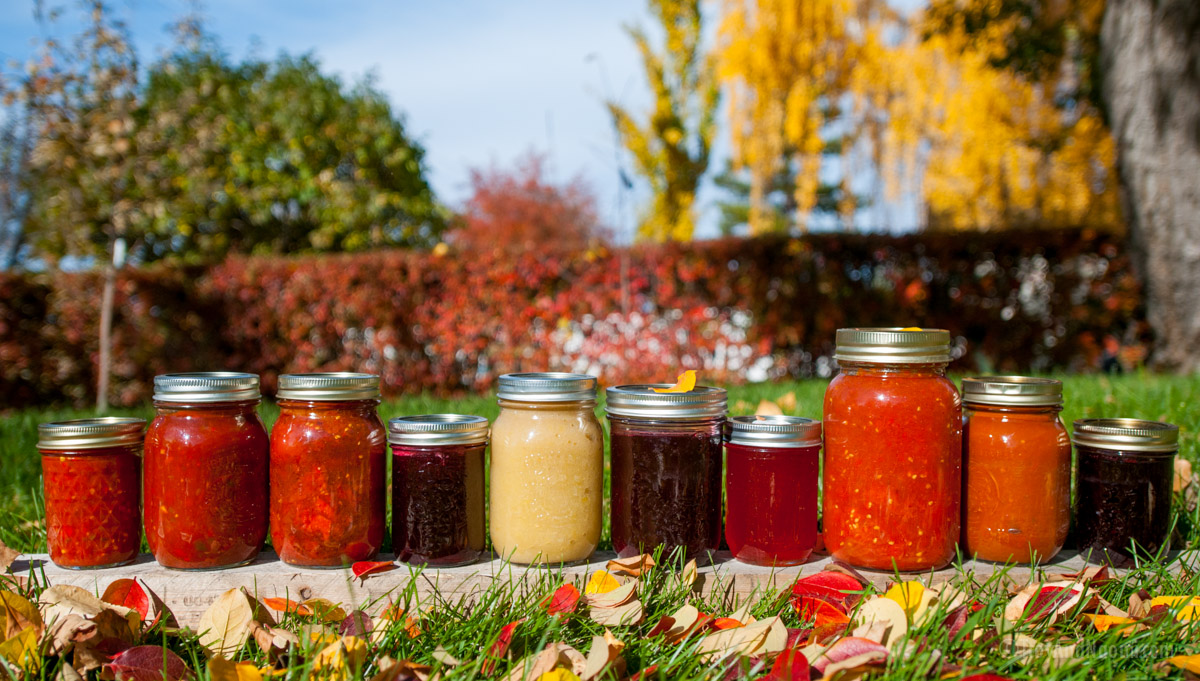
With another heavy frost forecast for October 1st, we decided to pull the plug, or at least the harvest. We felt that it wasn’t worth trying to fight -6C (21F) in early October as there wasn’t going to be much more of a growing season. That night we emptied the greenhouse to let stuff ripen indoors. The greenhouse has been a wonderful addition to the yard, and we have been able to grow so much in there. For the last month Naomi has spent lots of time processing the food and trying out delicious new recipes. Lots and lots of canning.
The harvest from our own yard and greenhouse includes: cucumbers, grapes, chili peppers, bell peppers, banana peppers, jalapeno peppers, roma tomatoes, cherry tomatoes, peas, carrots, lettuce, spinach, beets, onions, shallots, strawberries, raspberries, choke cherries, potatoes, and lots of herbs (sage, rosemary, thyme, basil, oregano, coriander).
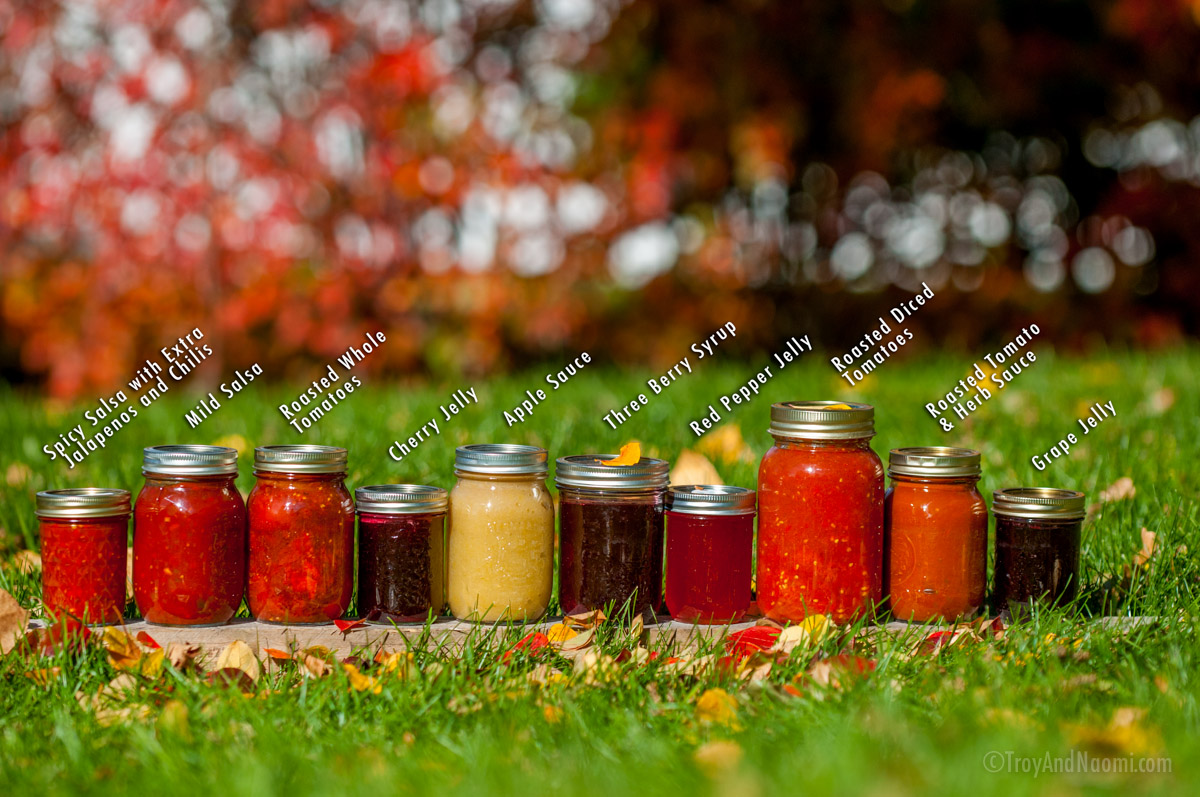
We also had a row of potatoes, onions, beets and carrots out at a friends farm. Our neighbor gave us two big bags of apples from their tree. From friends’ yards we harvested nanking cherries, raspberries, saskatoon berries and red currants.
We recently planted 4 blueberry shrubs and have some saskatoons to plant, so hopefully we will have that to add to future harvests, and we expect to see our three different apple trees start to produce too.


He makes springs pour water into the ravines;
it flows between the mountains.
They give water to all the beasts of the field;
the wild donkeys quench their thirst.
The birds of the sky nest by the waters;
they sing among the branches.
He waters the mountains from his upper chambers;
the land is satisfied by the fruit of his work.
He makes grass grow for the cattle,
and plants for people to cultivate—
bringing forth food from the earth
Psalm 104:10-14
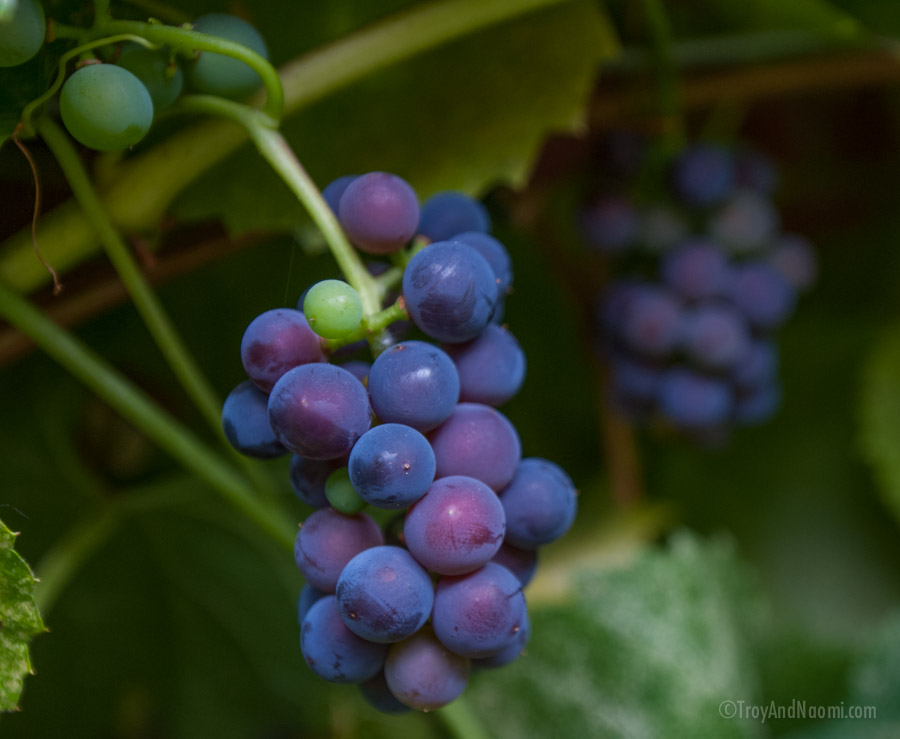
We had to harvest our Valiant grapes a bit earlier than planned this year because of an unseasonably early snow and heavy frost in early September. Apparently, waiting to harvest until after a frost is not good if you are looking to make jelly as this leads to the grapes losing their pectin and then you will have a harder time getting it to set, which was a problem last year.
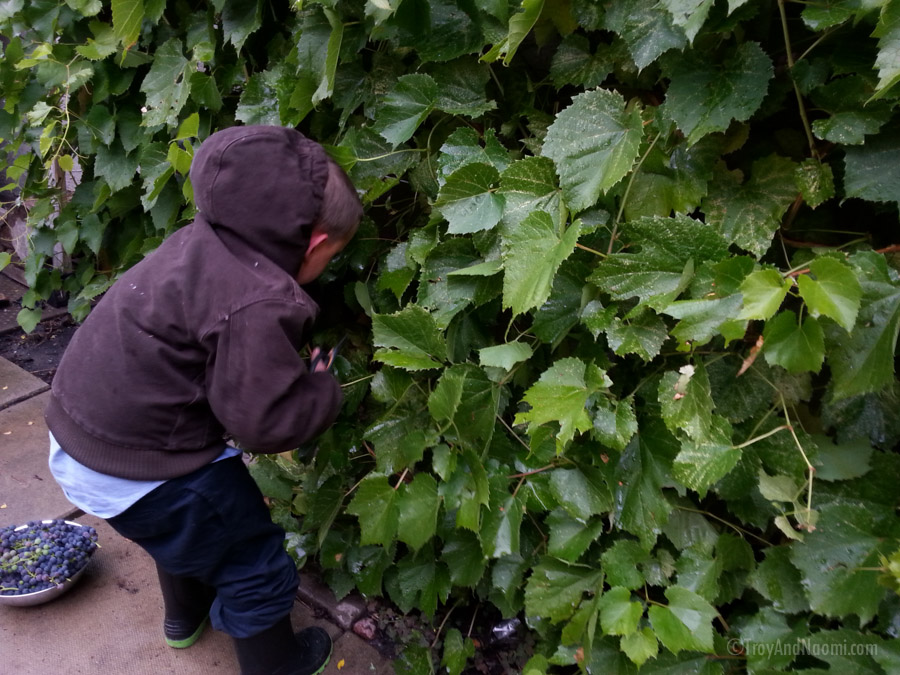
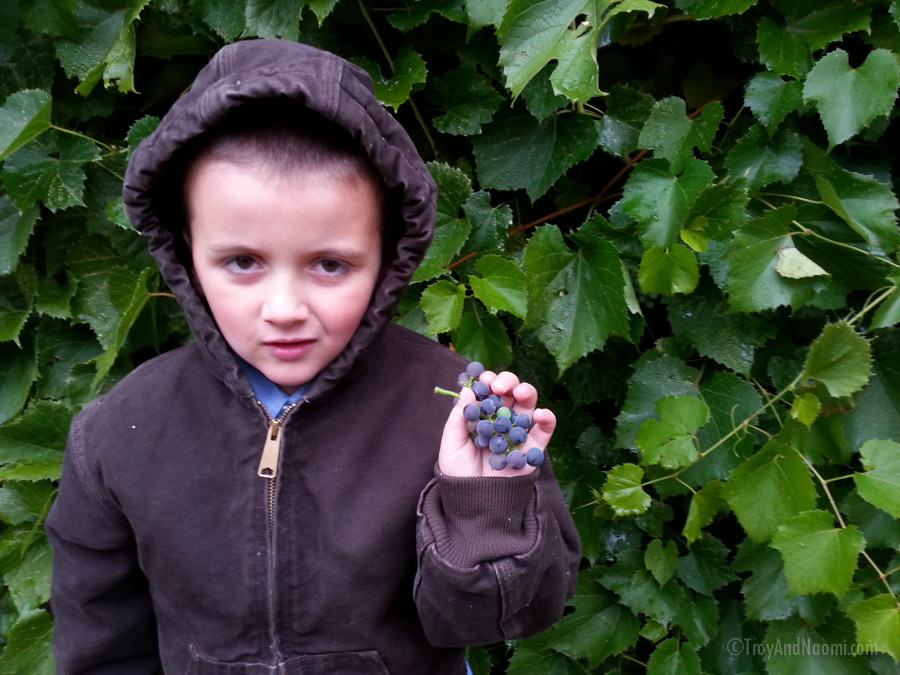
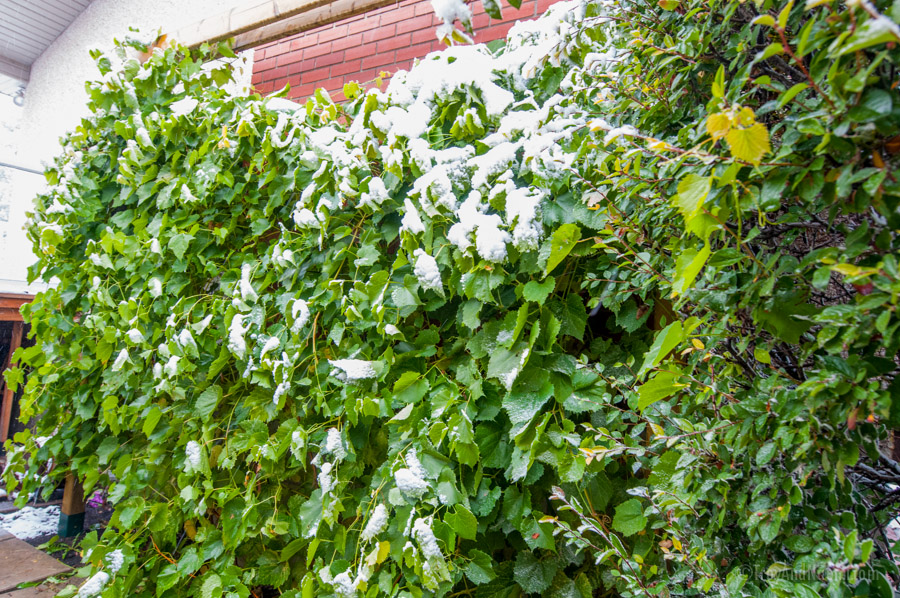
Naomi’s Vineyard had an decent harvest for our first year of having a proper trellis for our grapes. The vines were planted four years ago and their yield is increasing each year.
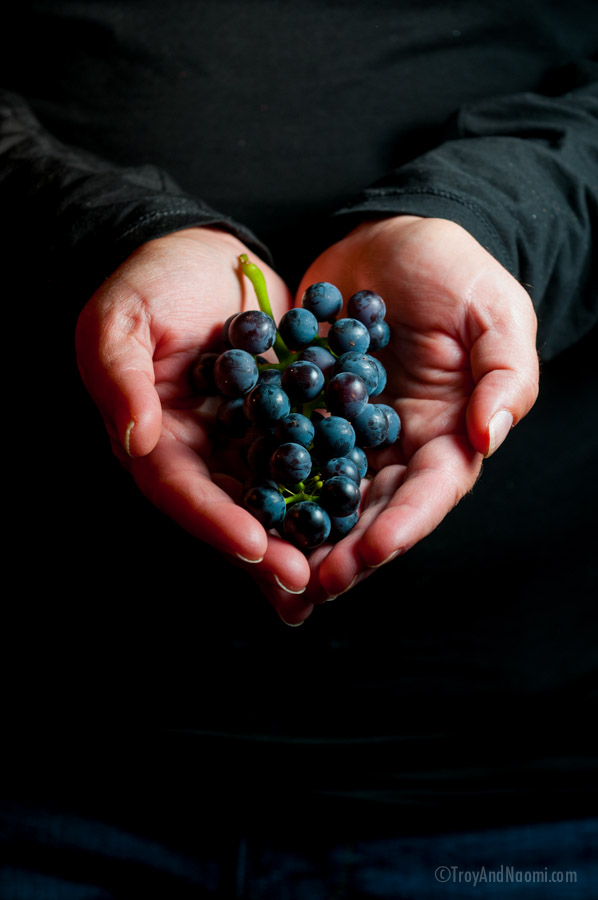
We harvested about 2.7 kg (6 lbs) of grapes…
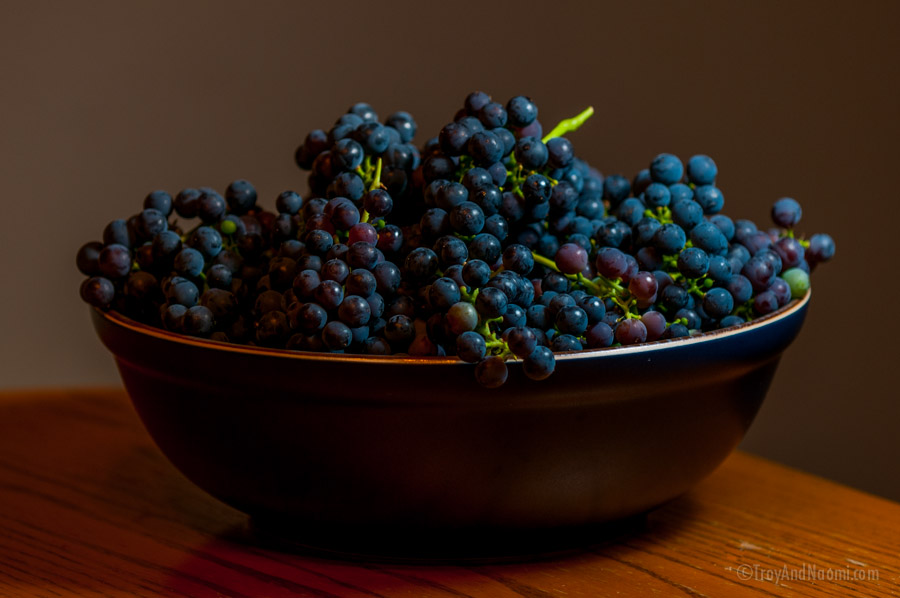
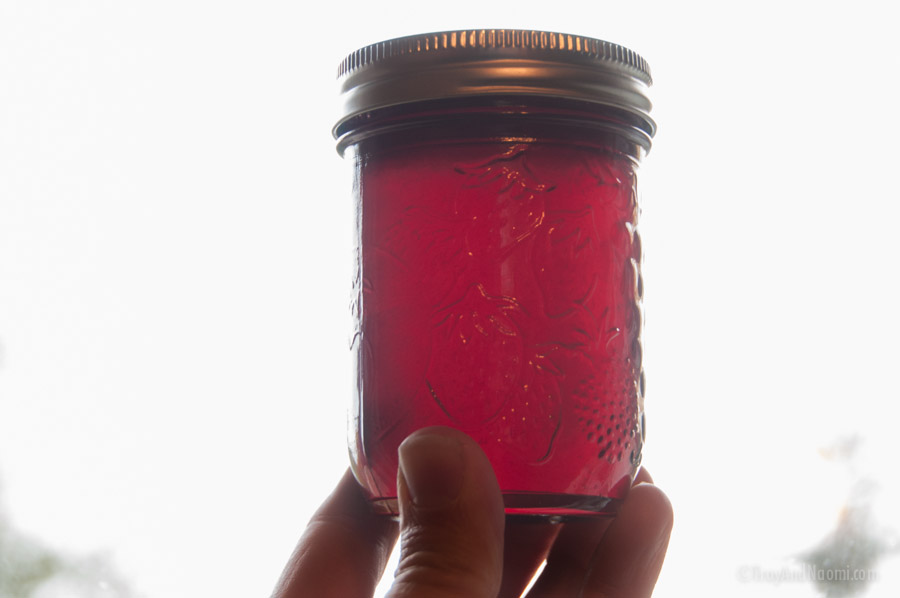
…and Naomi turned them into this!